View with a shift
View with a shift
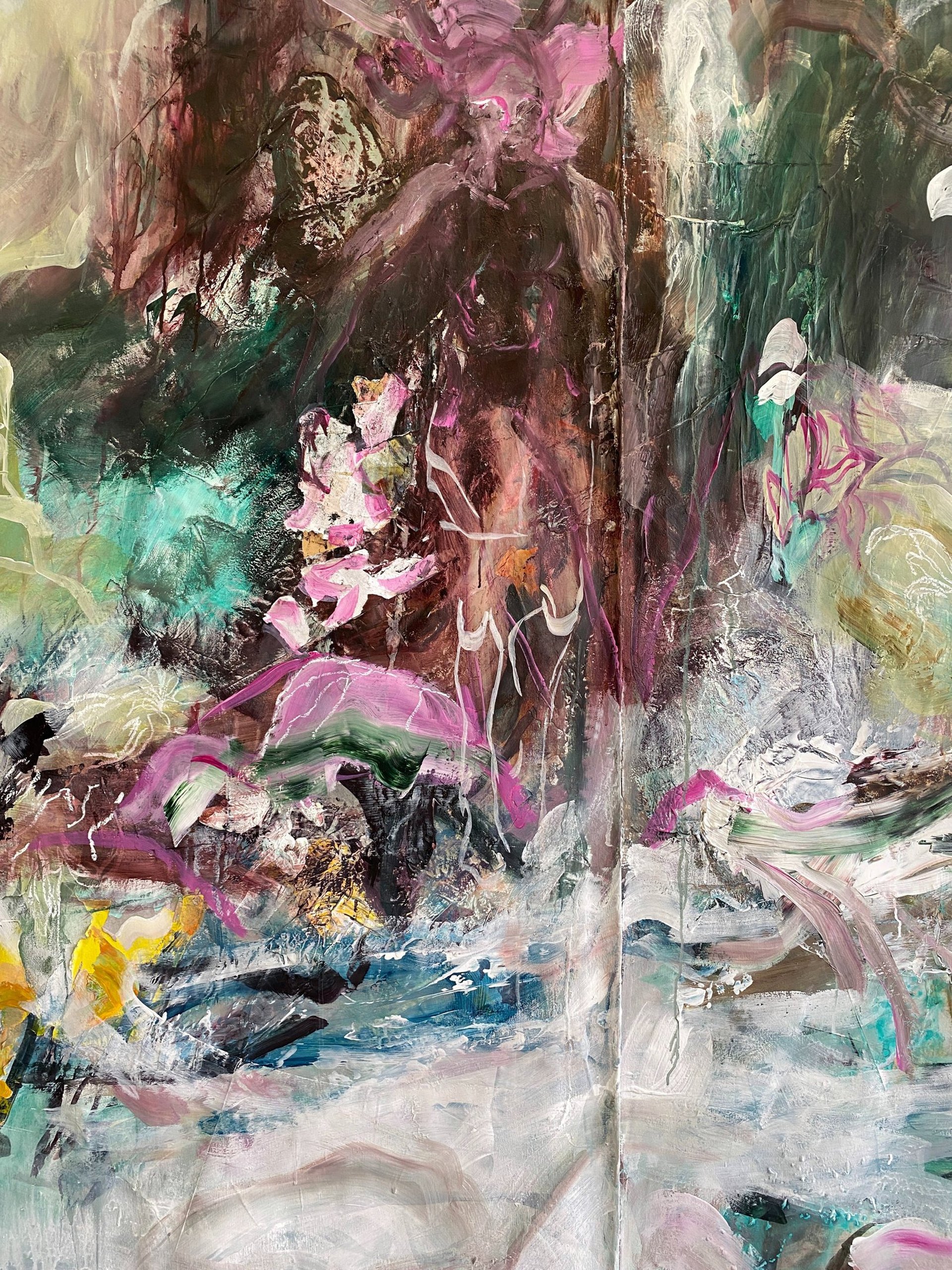
The idea of a “shift” runs throughout the exhibition. It is the movement from night into day, from the visible to the sensed, from distance to proximity. It is also the passage between different states of awareness: walking, observing, waiting, returning. Each work can be understood as the trace of an experience that began before its material realization, rooted in a direct relationship with the territory and with the slow rhythms of observation.
As the sun moves across the sky, light continuously transforms the forms, colours, and spatial relationships of the landscape. Nothing remains fixed. Shadows alter contours, volumes shift in intensity, and motifs seem to acquire successive identities throughout the day. Faced with this instability, drawings are executed rapidly and continuously, often without returning the gaze to the subject. The aim is not accuracy of depiction, but the exercise of memory—the attempt to retain a fleeting impression before it disappears.
Later, these observations merge with other experiences, other places, and other moments. Memory does not organize information according to standards of visual fidelity; rather, it constructs relationships of affinity, intensity, and meaning. The images that emerge in painting belong to this intermediate territory, where different times and places coexist and transform one another.
In this sense, painting does not seek to reproduce the landscape, but to understand the way it is absorbed through experience. What emerges on the surface of the canvas is less the description of a place than the synthesis of multiple encounters with a territory—a synthesis through which memory reorganizes lived experience and consciousness grants continuity to dispersed fragments.
Expanse of the world
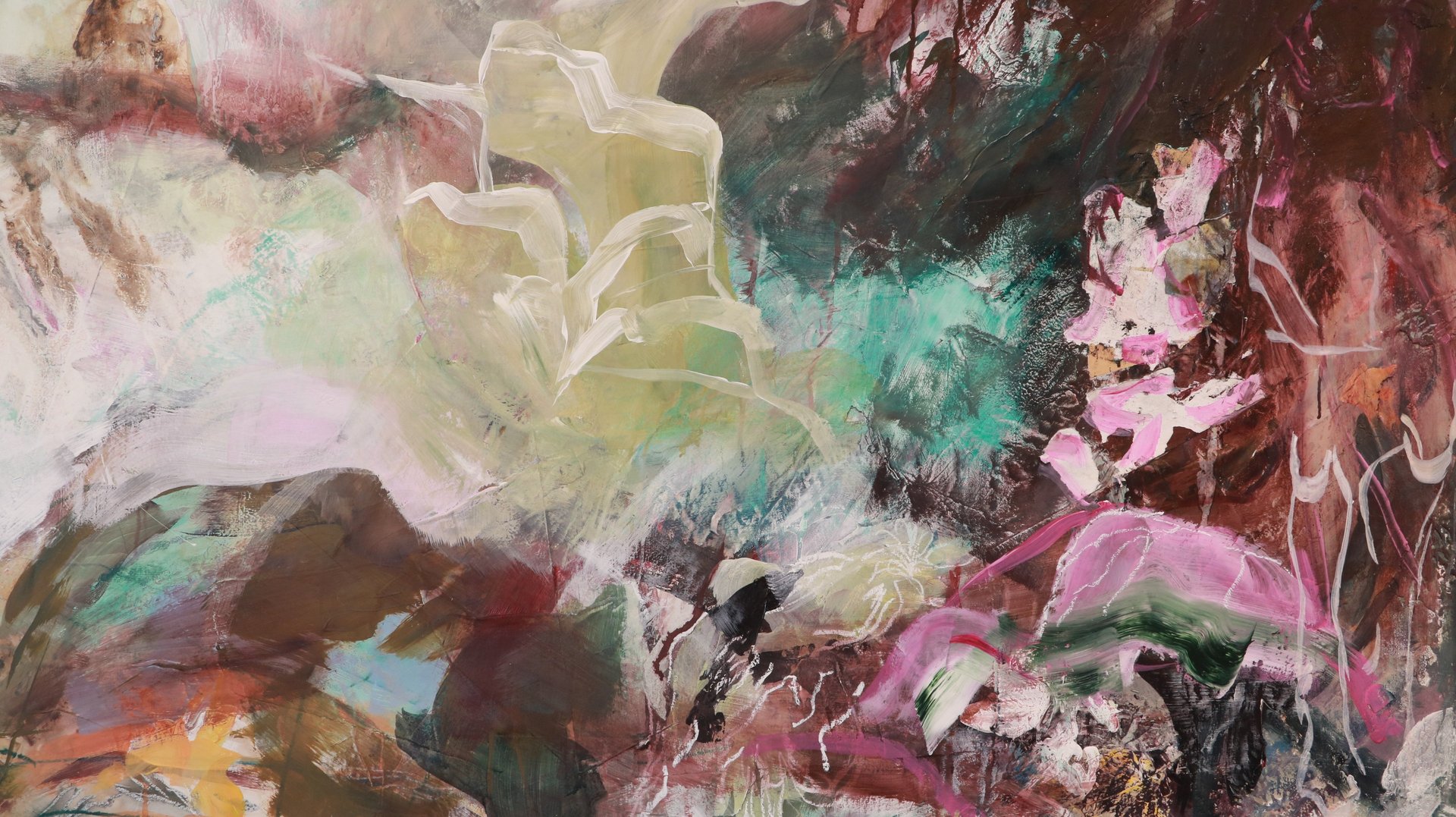
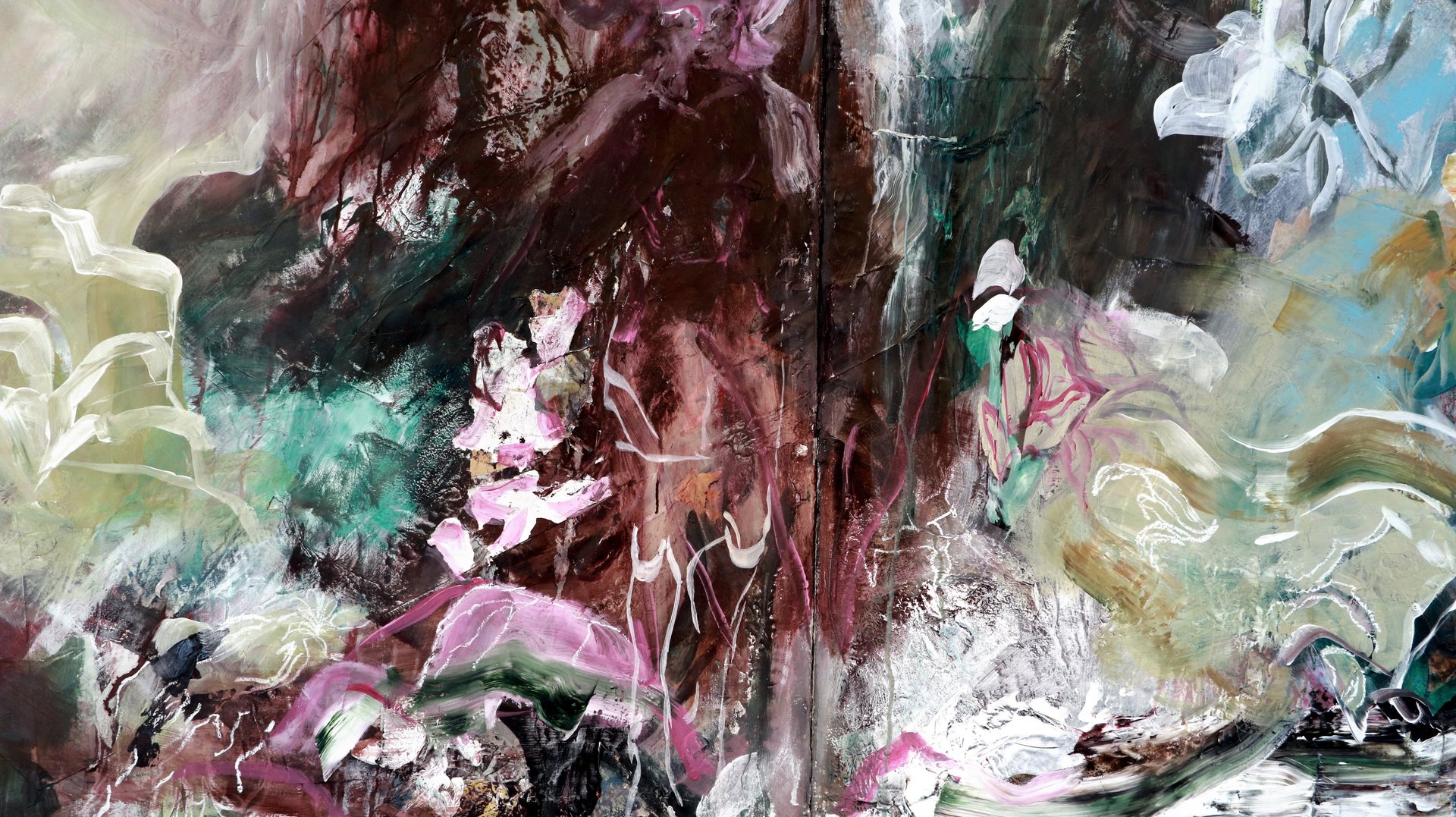
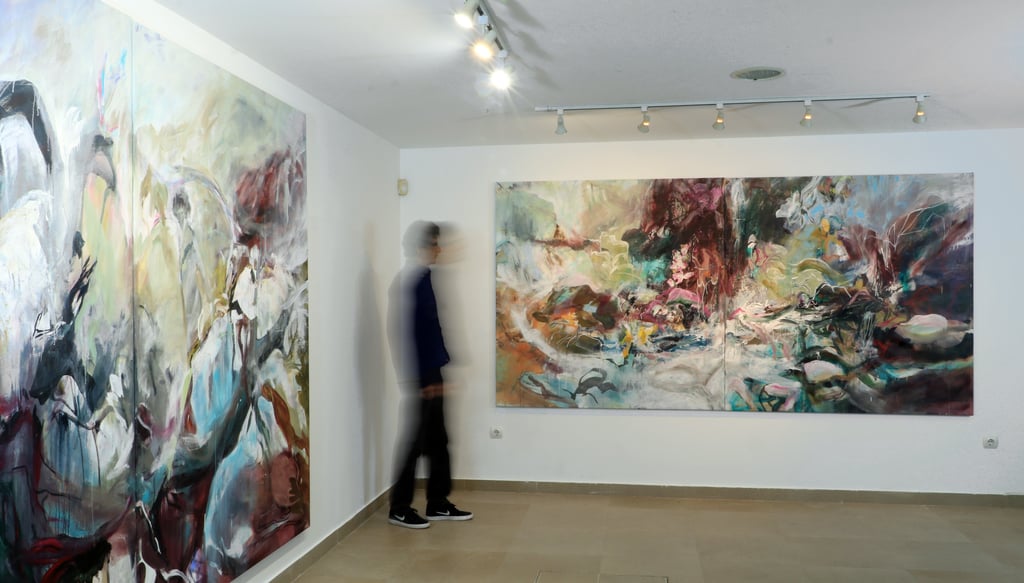
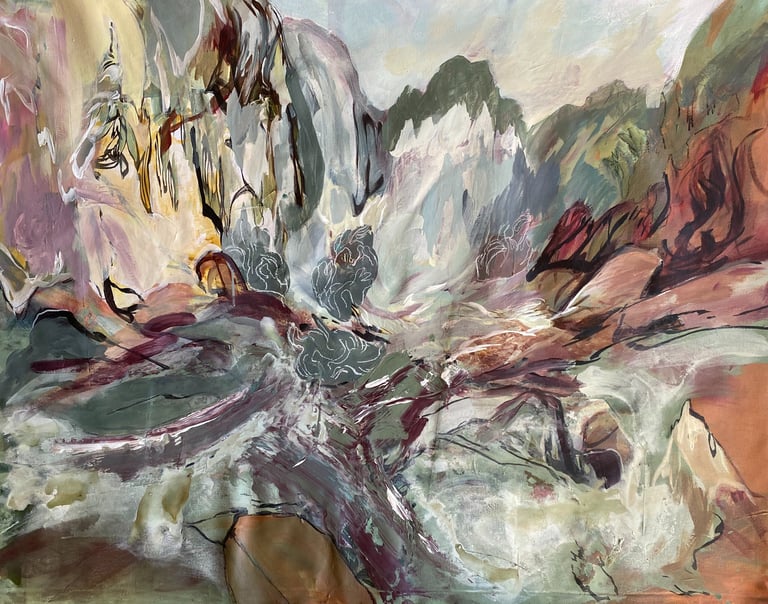
This set of eight paintings is grounded in the conviction that no landscape is ever perceived in the same way twice. Each return to a place generates a new configuration of memory, attention, light, time, and experience. The expansion of the world does not arise from the discovery of new territories, but from the inexhaustible capacity of a single place to reveal itself anew.
Landscape is approached not as a fixed reality, but as a field of continuous perceptual transformation. The same path, the same horizon, the same fragment of light can never be exactly the same, because perception is always shaped by movement, memory, and the changing conditions of experience. A place is not simply observed; it is continually reconstructed through the encounter between the world and consciousness.
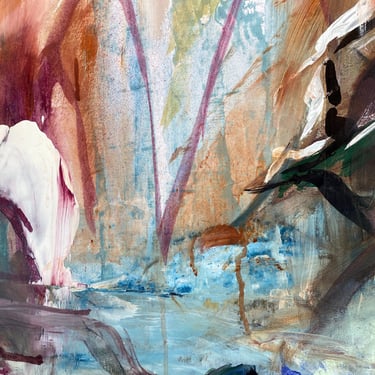
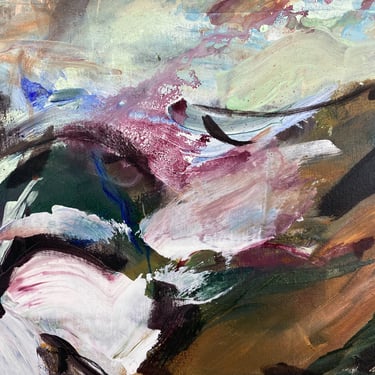
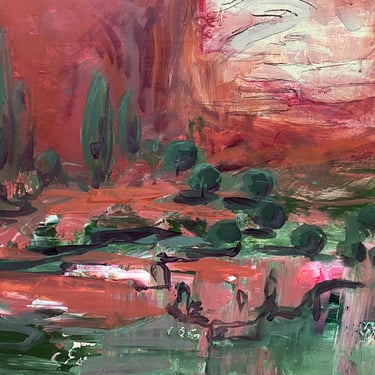
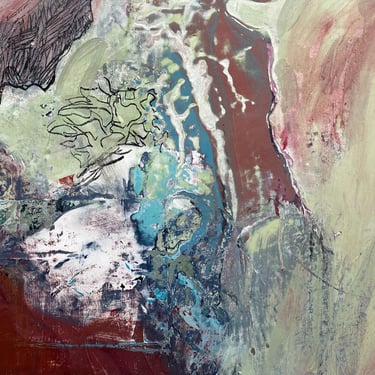
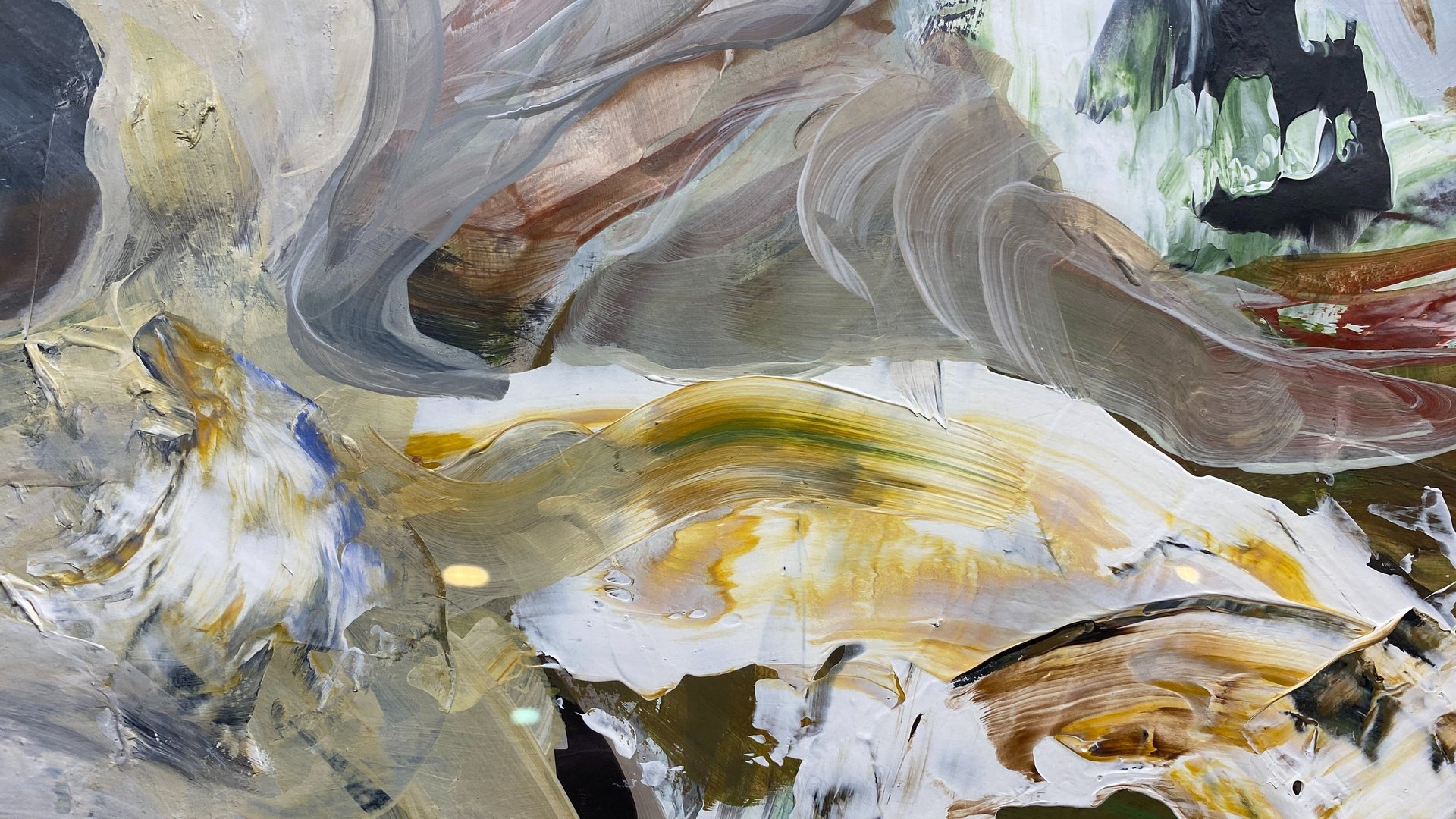
The paintings emerge from this understanding of landscape as an event rather than an object. Through layering, displacement, transparency, and repetition with variation, multiple moments of observation coexist within the same image. Traces of different times, atmospheres, and perceptual states accumulate across the pictorial surface, dissolving the notion of a single, definitive view. The image becomes a site where presence and memory, observation and recollection, coexist.
At the centre of the project lies the idea that repetition does not truly exist. Every return produces difference. A single place contains a multiplicity of potential landscapes, unfolding through lived experience and through duration—not chronological time, but accumulated time, where past and present remain intertwined.
Landscape is therefore understood not as something contemplated from a distance, but as something constructed through movement. The expansion of the world occurs through the body's passage across territory, through repeated journeys, and through the continuous deepening of experience.
The title Expanse of the World proposes a form of vastness that is neither geographical nor cosmic, but perceptual. The world expands not because the horizon recedes, but because the experience of the horizon becomes increasingly rich, complex, and inexhaustible. It is an expansion of depth rather than distance; an expansion of experience rather than territory.
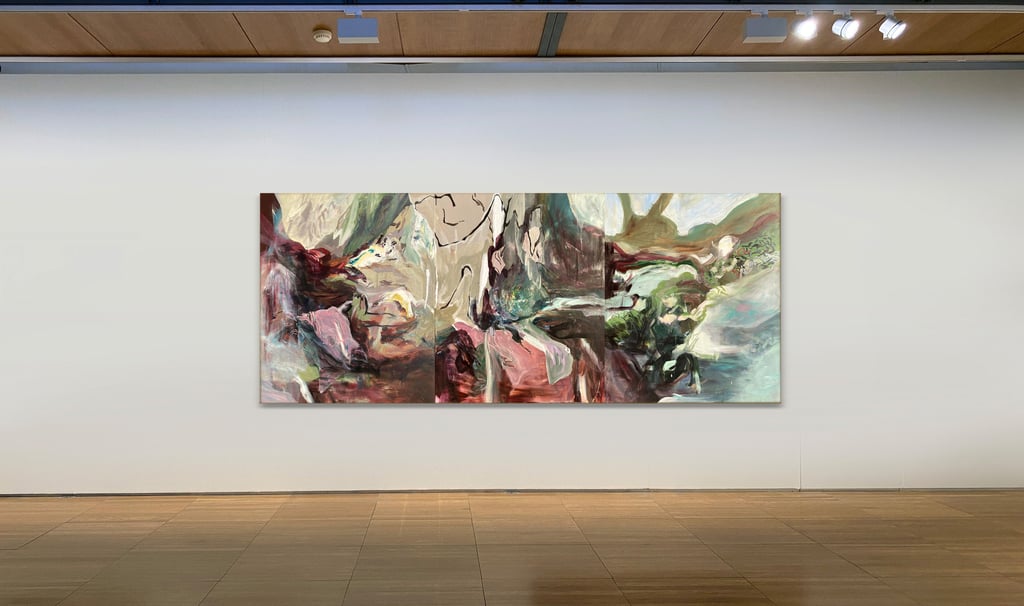
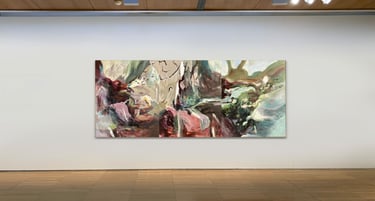
Blown by the wind
Mixed media on canvas
285 x 120 cm
Landscape is not invoked as a singular model or the sole destination of creative energy. What emerges in the paintings is neither the representation of a specific place nor an attempt to preserve an observed image. Instead, the images result from a process of accumulation and transformation, in which different experiences, times, and places intersect to generate a new visual field.
The lived experience of landscape occupies a central place in the artist’s practice. Walking, observing, and dwelling within a territory are ways of establishing a relationship with the world that later returns through painting. Yet what is observed is never transferred directly onto the canvas. Experience first passes through memory, perception, thought, and consciousness, becoming material for a process of construction in which gesture plays a fundamental role.
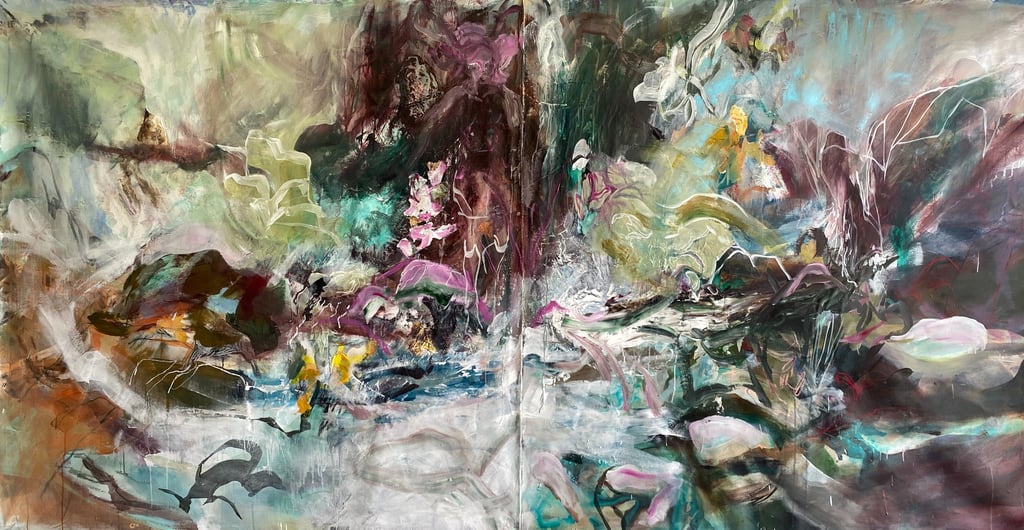
Absence & becoming
Mixed media on canvas
300 x 150 cm
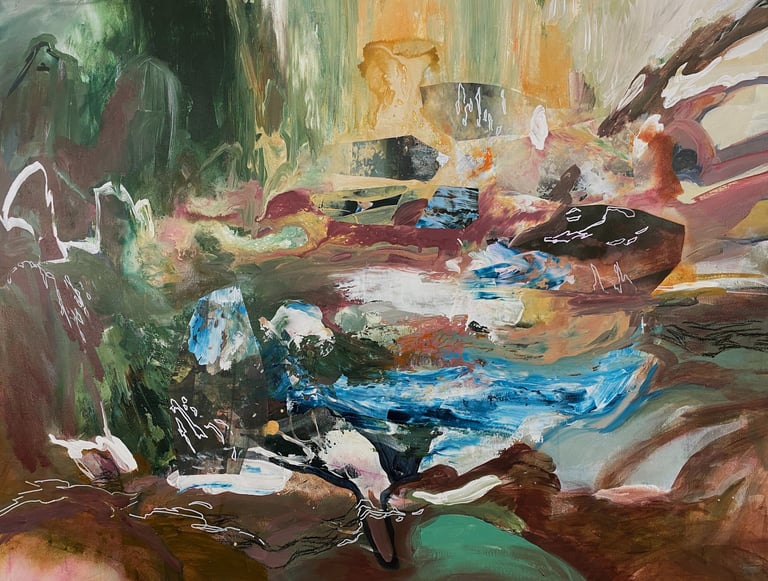
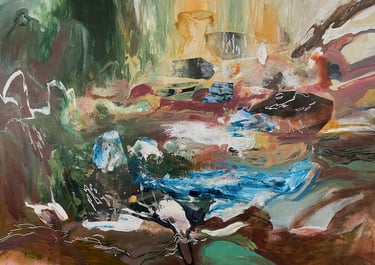
Spontaneously in a sensory experience
Mixed media on canvas
120 x 95 cm
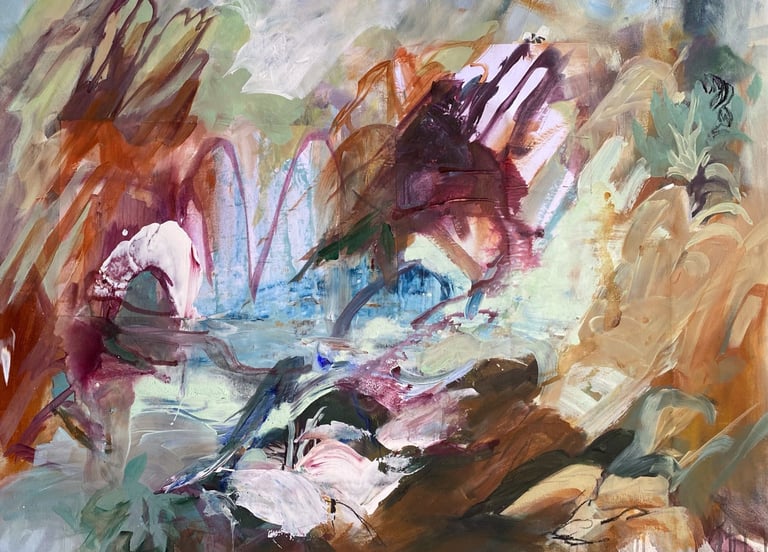
The Drift of Attention
Mixed media on paper
95 x 120 cm
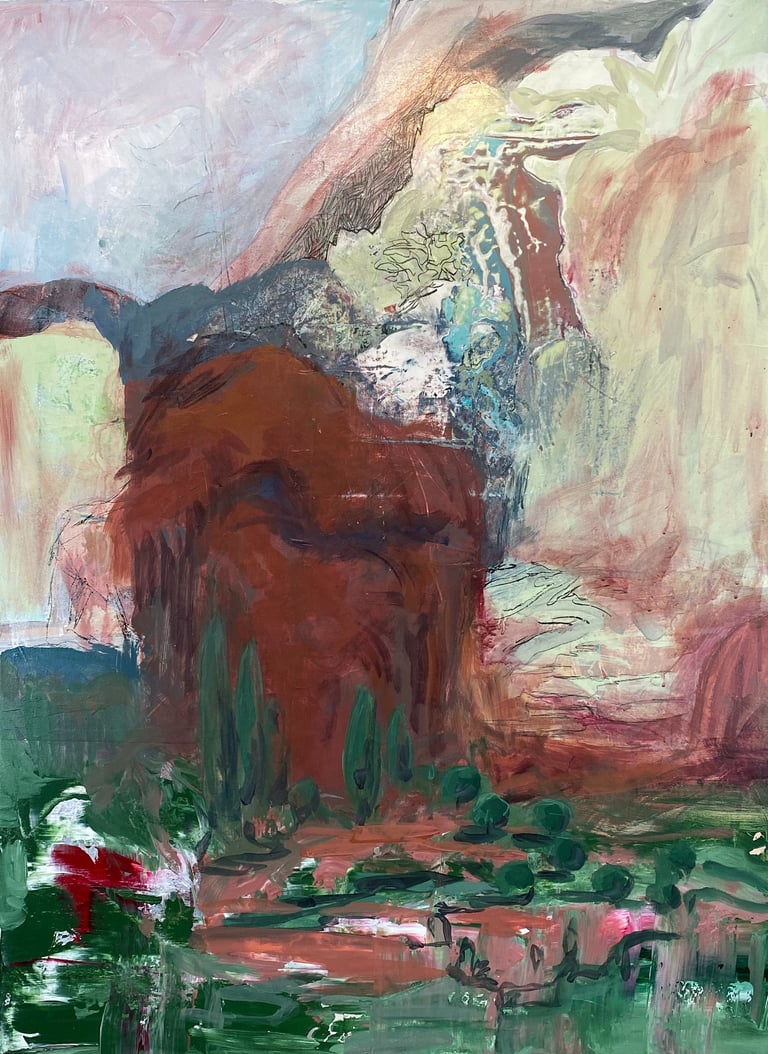
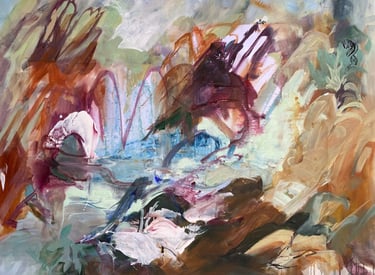
A luminosity that seems to absorb the physical complexion of the elements
Mixed media on canvas
95 x 120 cm
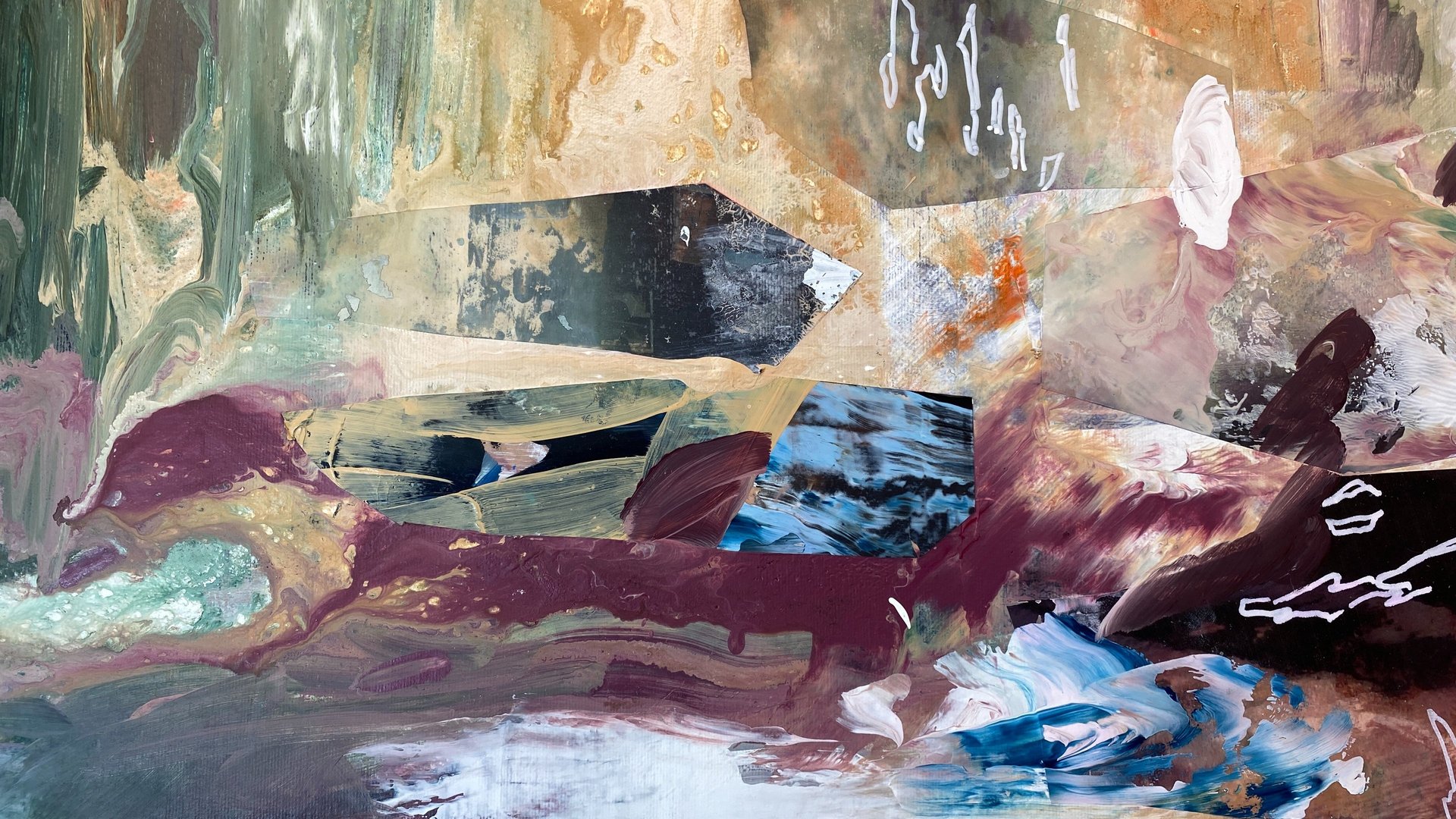
Expanse of the world
Mixed media on canvas
200 x 150 cm
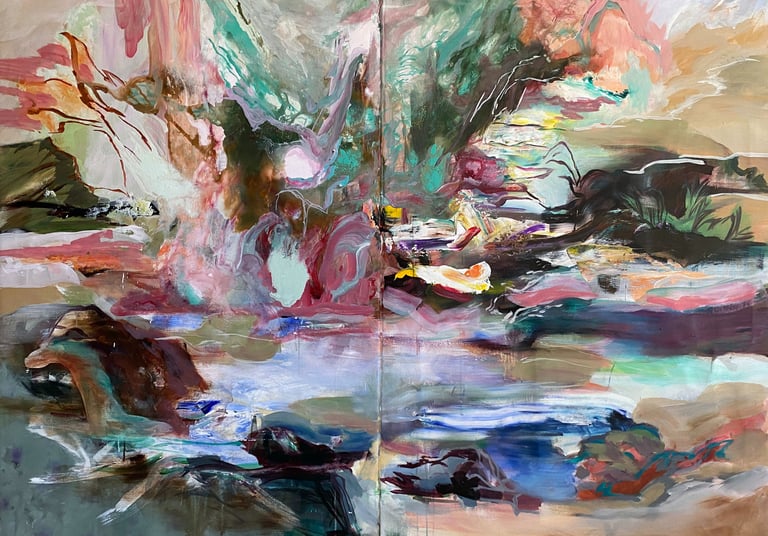
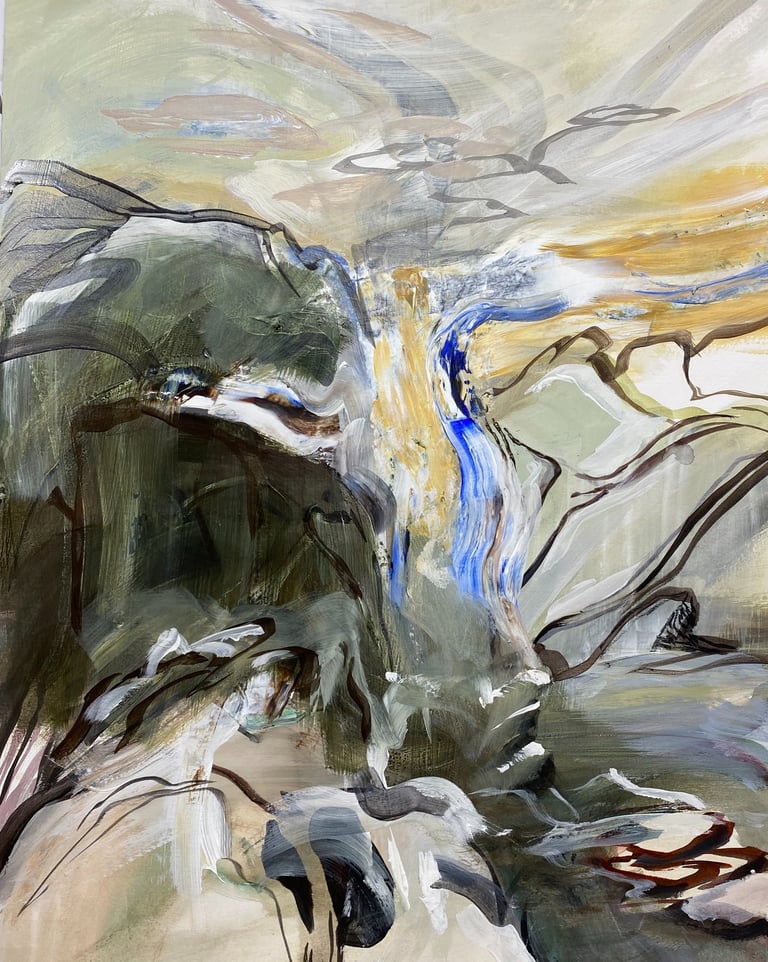
Liminal quiet
Mixed media on canvas
100 x 80 cm
Rivers & mountains
Mixed media on paper
35 x 50 cm
The Geography of Attention
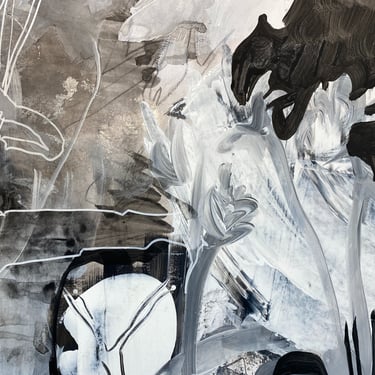
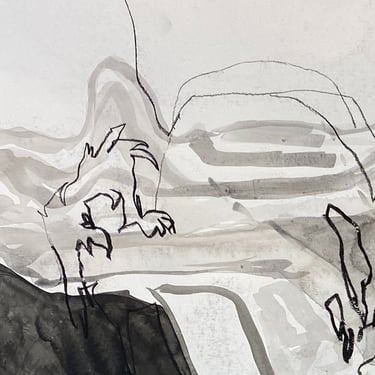
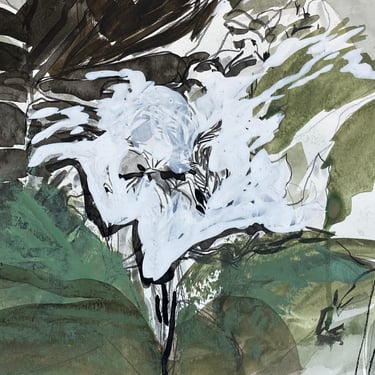
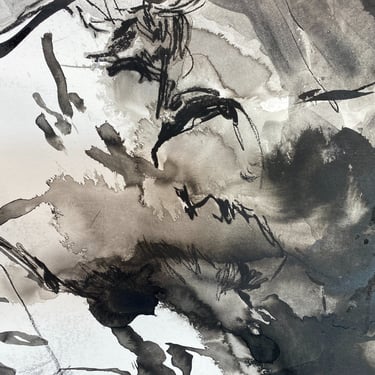
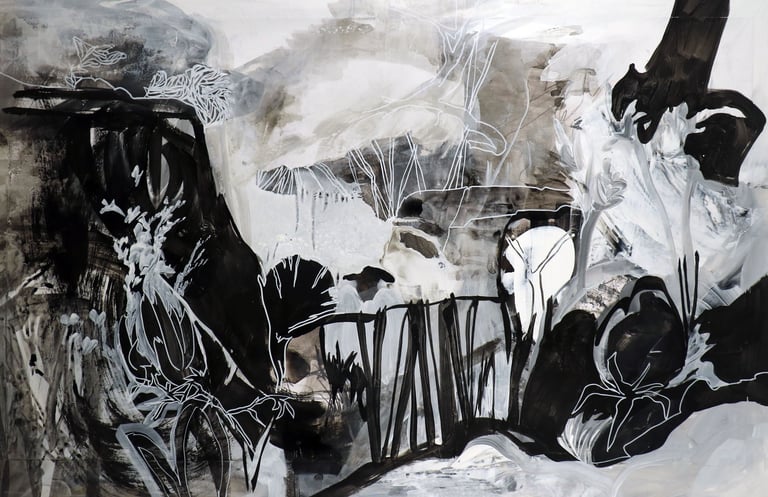
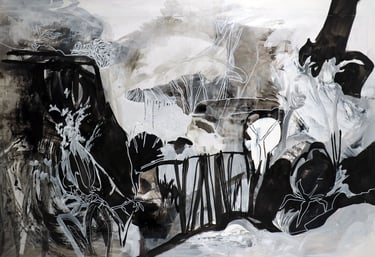
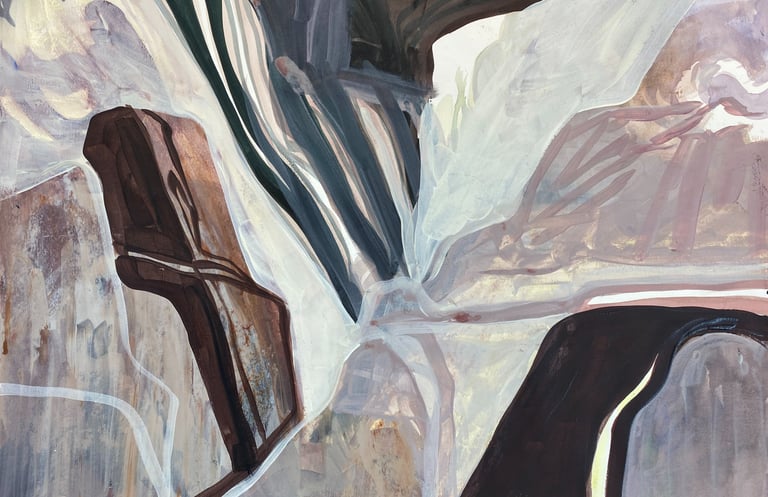
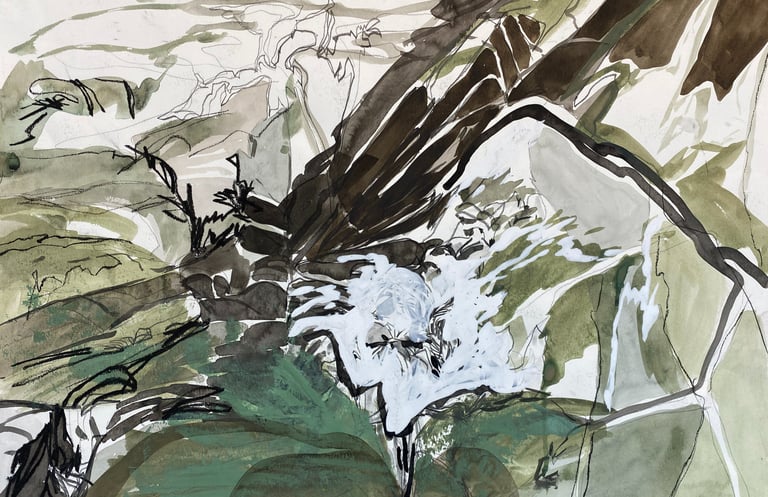
This series of drawings explores the landscape through a process of translation rather than representation. Derived from sketches made at the close of day, the works emerge from a moment when diminishing light alters perception, transforming familiar surroundings into fields of contrast, shadow, and shifting forms. As daylight recedes, details dissolve and the relationships between light and darkness become more pronounced, revealing a landscape in a state of transition.
Moonlit#4
Mixed media on paper
100 x 70 cm
In these drawings, elements of the natural environment are distilled from their realistic contours and reconfigured within a graphic vocabulary of lines, shapes, and rhythmic structures. The resulting compositions evoke movement, change, and the temporal nature of perception, capturing not a fixed view but the experience of looking. Through this process, the landscape becomes an active space where observation, memory, and abstraction converge, inviting viewers to engage with the transformations that occur between visibility and obscurity.
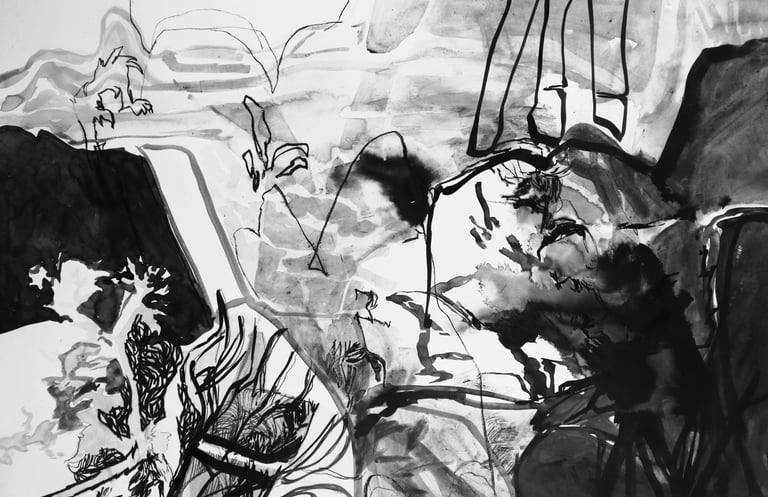
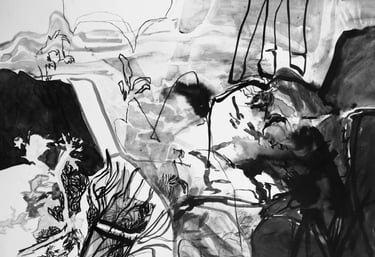
Moonlit #5
Mixed media on paper
100 x 70 cm
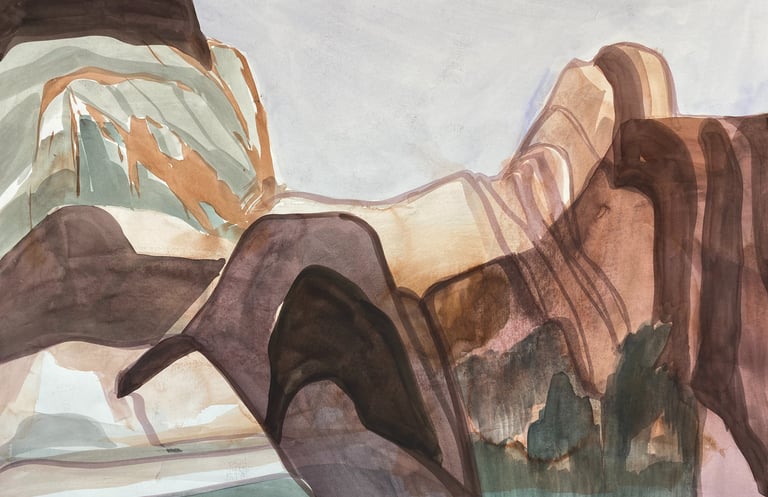
Night bound # 9
Mixed media on paper
41,5 x 59 cm
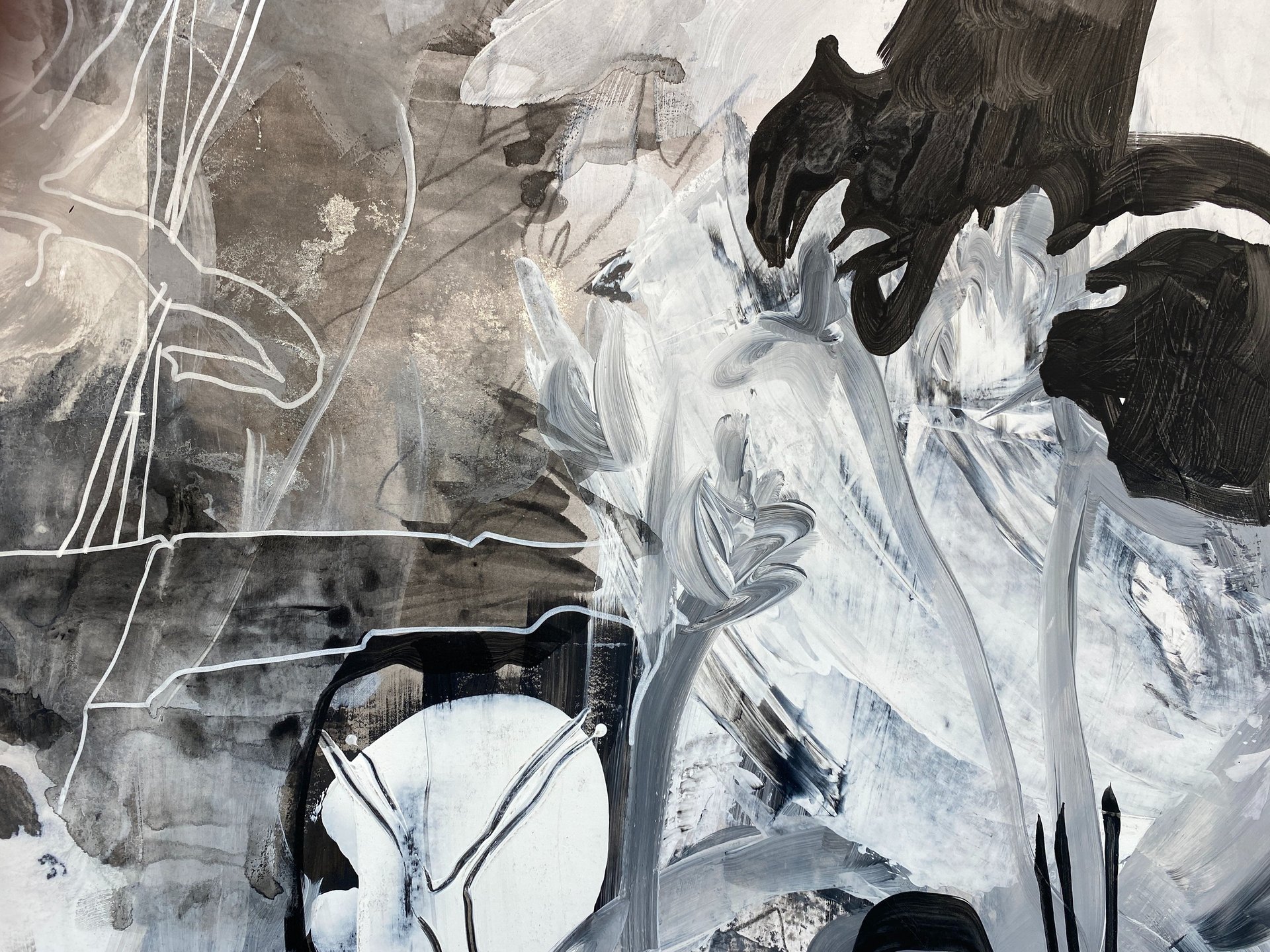
Night bound # 16
Mixed media on paper
41,5 x 59 cm
Night bound # 20
Mixed media on paper
41,5 x 59 cm
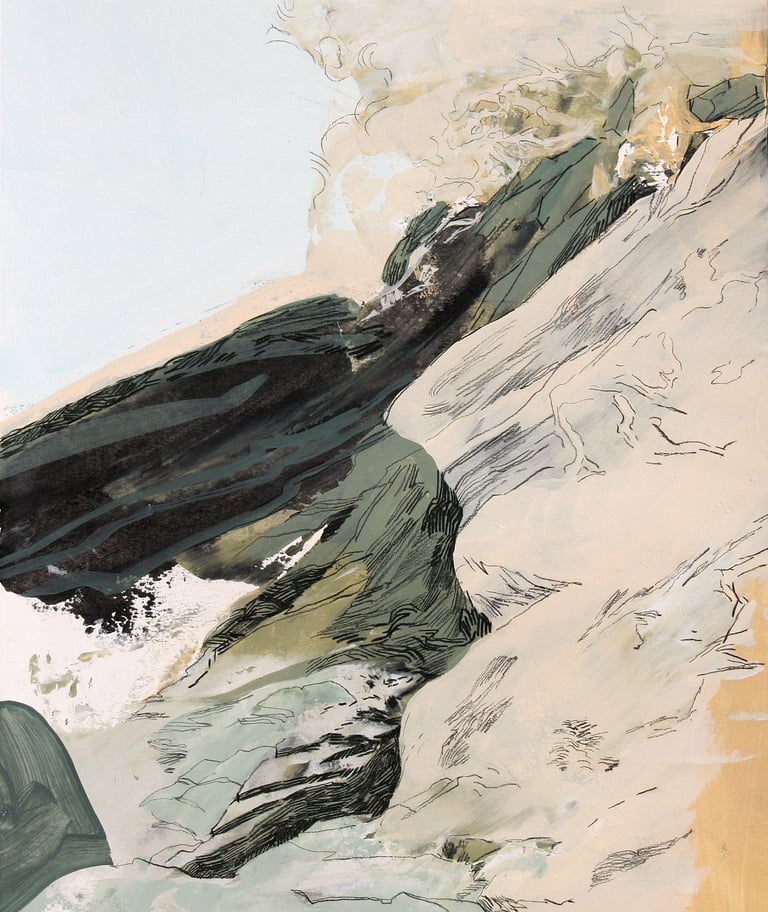
Attention harassment on explicit details #20
Mixed media on paper
42 x 59,5 cm