Idealization about factual events
In relation to the seascape, there was a latent energy, a diffuse profile that projected itself into my imagination, which would hardly be left out of the painting equation.
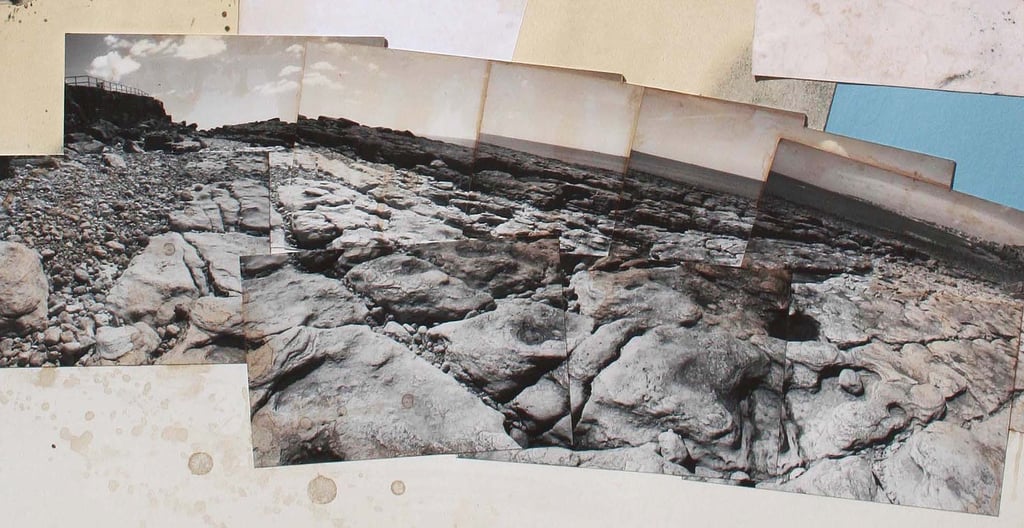
At the edge of the continent, where the land gives itself over to the vast ocean, the Finisterra experience unfolds—not as a destination, but as a quiet unwinding. The air feels different there. Salt clings to your skin, the wind whispers, and the horizon stretches so far it seems to dissolve the very edges of the Earth. Standing on those cliffs, you become aware of your own smallness—not in a diminishing way, but in a freeing one. The noise of everyday life fades, replaced by the steady rhythm of waves crashing against the rocks.
Finisterra isn’t just something you see; it’s something you feel. It lives in the long pauses, in the slow drift of clouds, in the golden light spilling over the sea at sunset. Time behaves differently here. It loosens. It expands. There’s something deeply human about reaching the “end of the earth.” For centuries, people have come to places like this carrying questions, burdens, hopes. And somehow, without offering clear answers, Finisterra transforms them—it reframes things.
The ocean was just a short distance from our home. I knew it well because I went to the beach all year round. That experience took on a new meaning when I started reading stories about the Portuguese discoveries and the drama those adventures carried. In those stories, there was always a connection to cosmic forces powerful enough to shape human destiny.
My own experience of the beach was the opposite—a place of lightness and play. But at some point, these two sides of reality—the bright, everyday one I lived, and the darker one told by the explorers of the past—began to form a kind of paradox. It wasn’t just about how history impacted my experience, but also about how memory shapes what we do in the present.
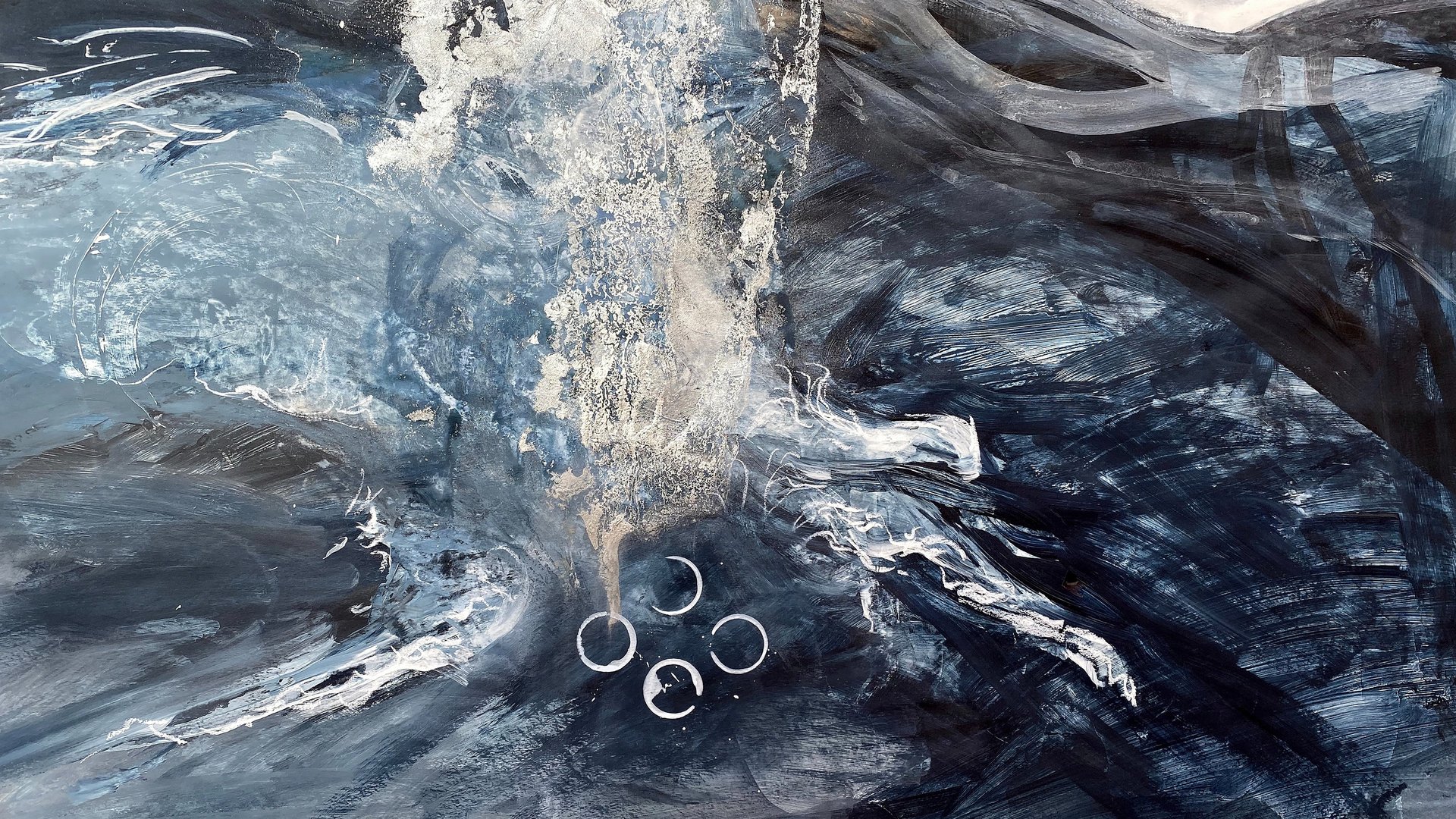
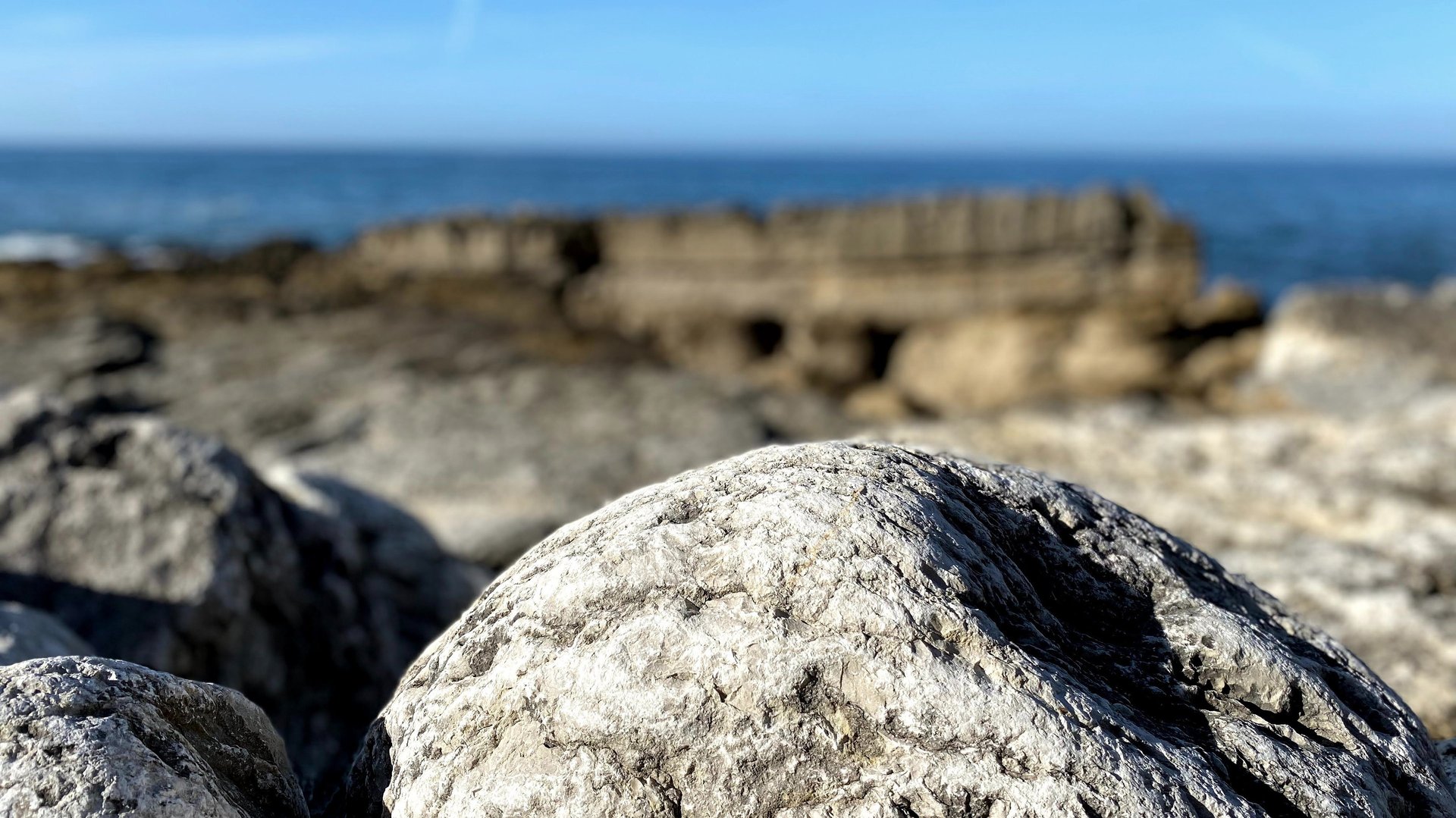
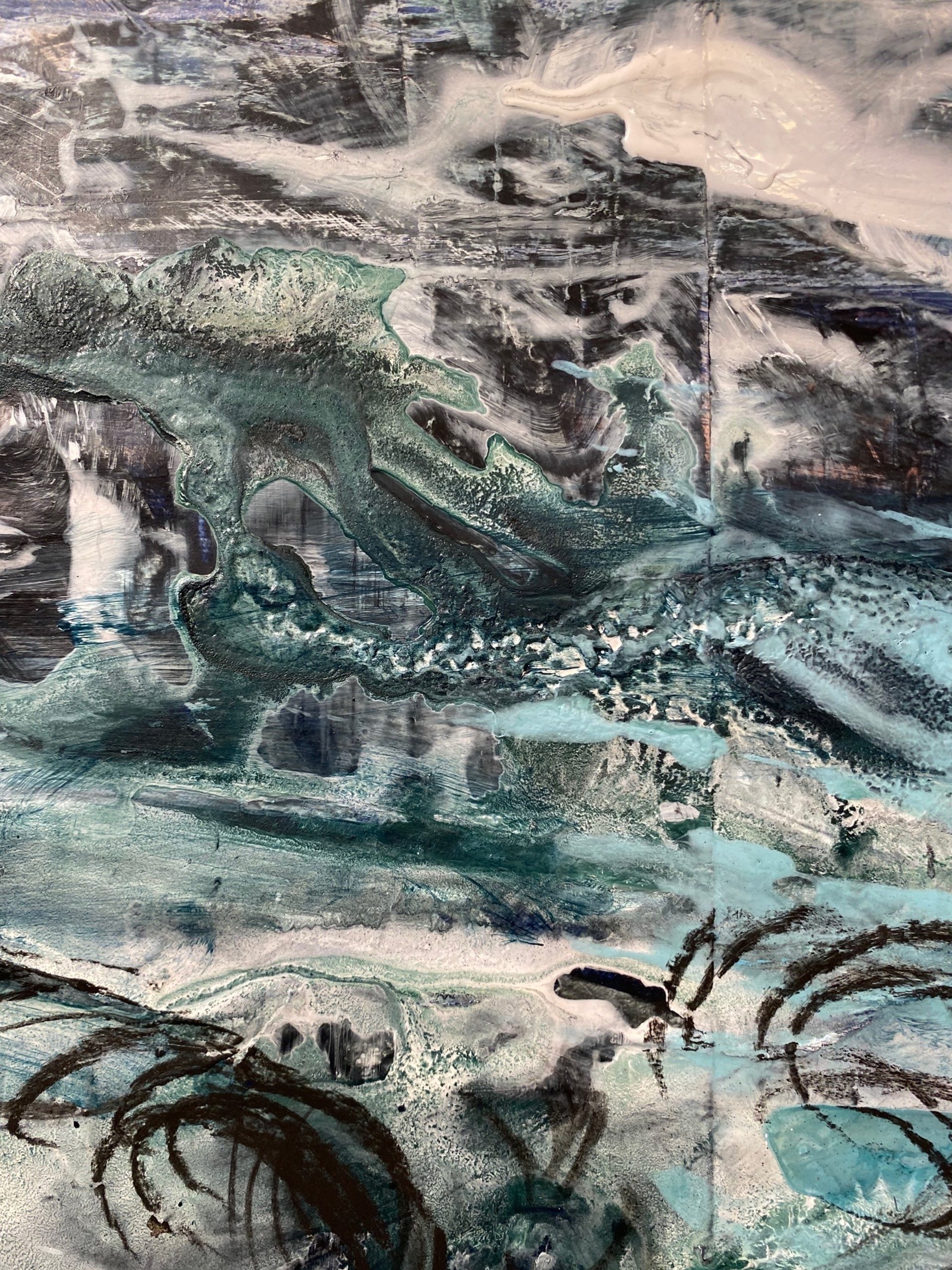
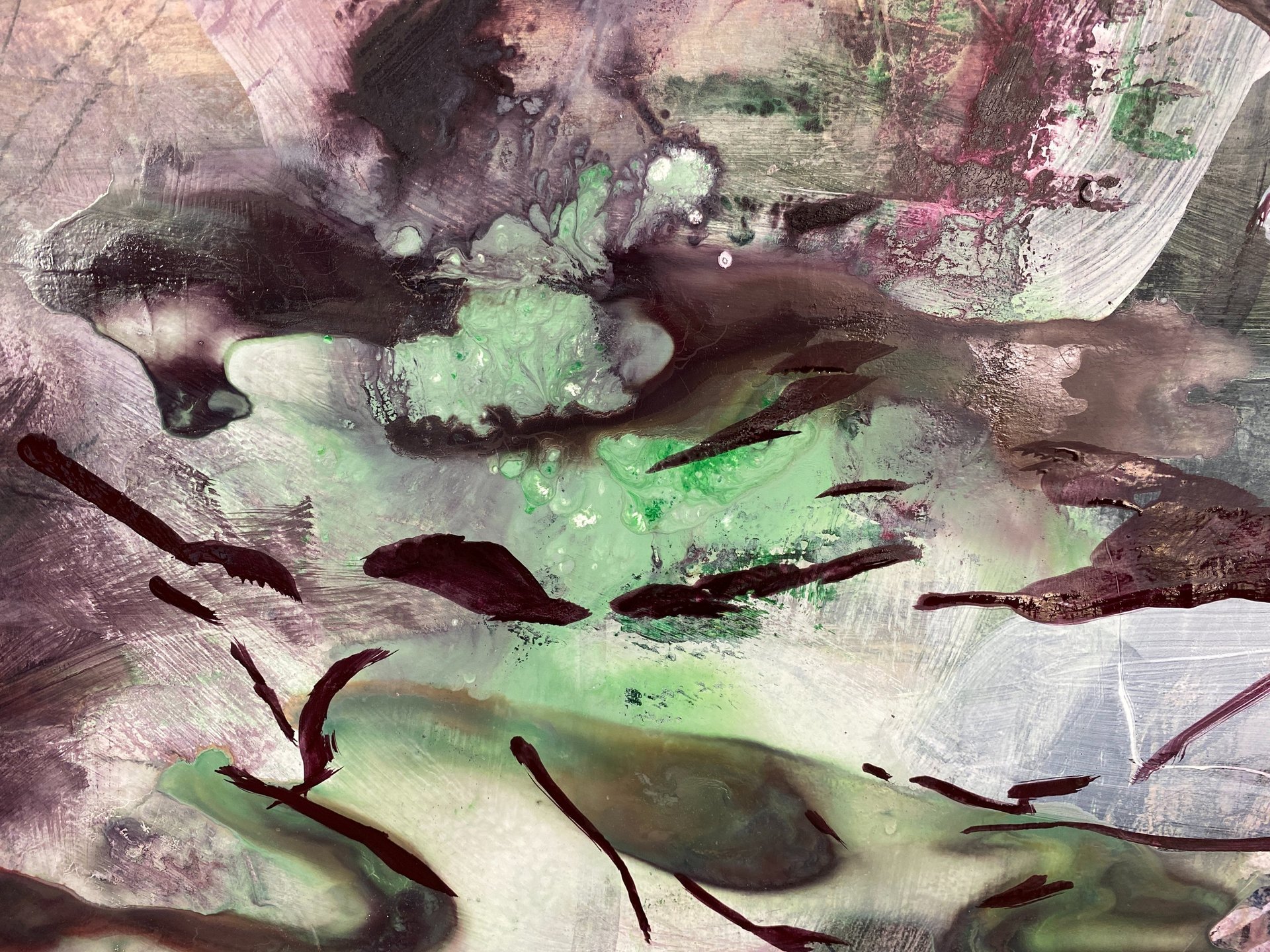
The landscape could be two things at once: a setting of beauty, full of good memories, and something more dramatic, with a hidden, shadowy side—the version shaped by centuries of a difficult relationship, where the sea stood for the raw, brutal forces of nature.
That was the narrative I had absorbed from history books and from Portuguese writers whose work struck me deeply, especially in the way they described the boldness of those sailors. They took enormous risks, setting out in ships that were little more than fragile shells in the vast, restless ocean. Keeping that context in mind mattered to me, because it added new layers to the scene.
For me, those two landscapes—the real and the poetic—blended together, blurring the line between light and shadow, between bright white beaches and the turbulent imaginary spaces where different rules seemed to apply.
From my point of view, the maritime landscape carried a kind of latent, undefined energy that fed my imagination—something that couldn’t be left out of my painting. The challenge was to define the identity of a landscape with these two sides, very different yet complementary, like two faces of the same coin. It meant bringing together the natural image and a more subjective layer tied to myths and legends.
Combining the luminous side of the landscape with the darker side of fear and uncertainty had the potential to turn a natural setting into a stage of emotion.
My fascination with the seascape grew alongside me. Looking at that vast expanse of water always stirred my imagination. It was a double-edged experience—on one hand, harmony and pleasure; on the other, discomfort and fear. It was as if that liquid plain both enchanted me and pulled me toward its depths.
There was something unsettling behind it all: the immense force of nature, the hidden diversity beneath the surface, the depth I experienced during my amateur dives, the risk of being immersed in a place where we simply can’t survive for long.
It was an experience where pleasure and fear mixed in a strange way, leaving behind a bittersweet feeling. I think it was from that very tension that, early on, I began to build the foundations of what would become the “Finisterra Experience.”
In the early works from that period, the landscape feels mythical, built from symbolic elements that represent ideas and events that don’t really belong to a logical, real-world context. Instead, they’re there to give shape to an expression that matches the “spirit of the moment.” These symbols might take the form of navigation tools, old armillary spheres, decaying ships, or fleeting glimpses of an “Atlantis” rising out of the soft shadows of a foggy morning. A lost paradise, later rediscovered in the aftermath of the boldness of original sin.
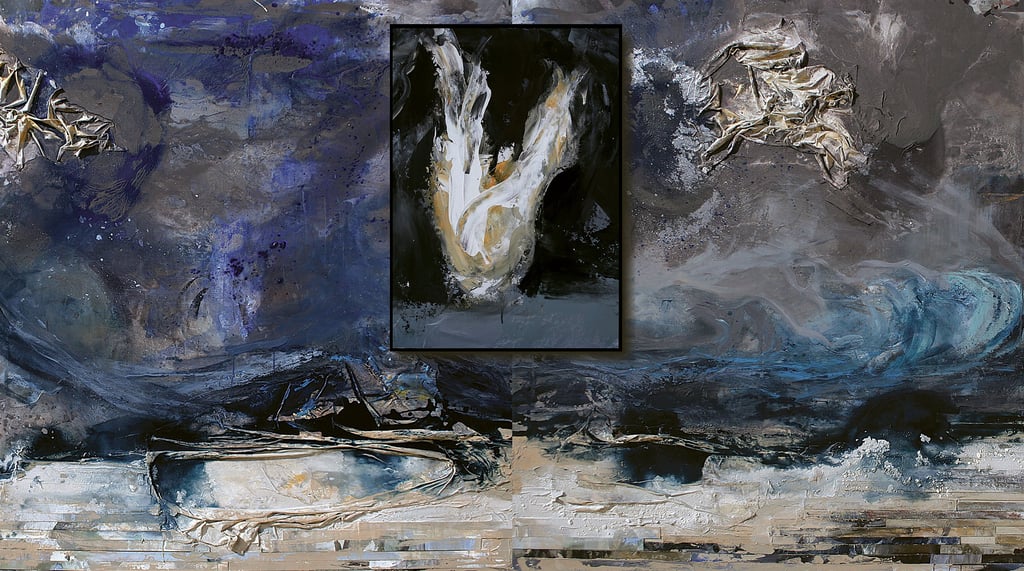
All of this gets folded into the idea of landscape, turning it into a multisensory experience that isn’t tied to historical time or physical geography. That landscape becomes a blend of all these layers. It was easy for me to lose track of time just staring at the ocean’s vast, majestic surface. The sea, with its light and beauty, made paradise feel real—the myth felt real. Every moment seemed like it could last forever.
That feeling is what shaped the ocean landscape in my imagination, as something that could stand for the beginning of everything—a tangible synthesis of the world’s genesis. Water, after all, is one of the primordial elements of creation. In many myths, it appears as the source of life, like a vast womb capable of holding everything.
In the myth of “Genesis,” the liquid element is always there, in the transition from chaos to order. It symbolizes change—a universal force shaping destiny. Religions, in particular, gave it a purifying role: great floods would reset history entirely, wiping away human decay and corruption from the face of the Earth.
That mythological weight must have haunted the darkest moments of many sailors who set out to sea, fully aware that their journey could end badly. Even today, that darker association hasn’t completely disappeared. The oceans are still a mystery—their scale immense, their influence on the planet’s future once again a central concern of our civilization.
As I was developing this series of paintings, another aspect gradually became more important: the exploration of nature. In those early years at the beach, I spent my time exploring the coastline, and at my scale, everything felt enormous. The days felt long because I made the most of them, searching every corner of the shore. That habit of close observation led me to collect countless details, which later became part of a kind of visual vocabulary.
Naturally, those memories have blurred over time. The details have softened—it’s impossible to revisit with clarity what once held my full attention. But the essence stayed with me. The important elements settled and took root, helping to shape the identity of that landscape in my mind.
It seems likely that the colors and forms that became characteristic of those paintings are directly connected to those early impressions. They’ve probably stayed with me ever since, like a kind of coded language—one that brings together a whole range of lived experiences into a single visual expression.