Landscape as a cosmology of the self
In the case of the landscapes, the images do not refer only to geography but above all to a process of mapping the territory in the perspective that some transformation ocours between observer and reality.
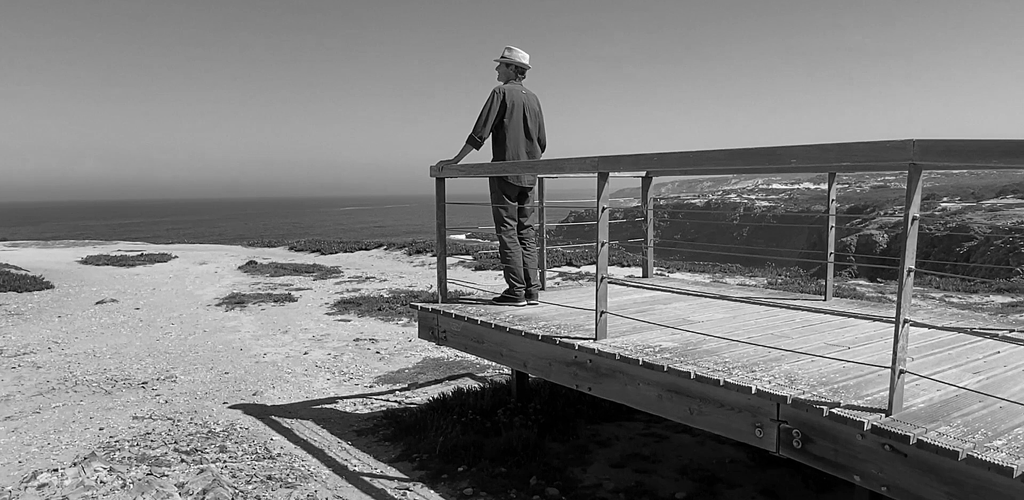
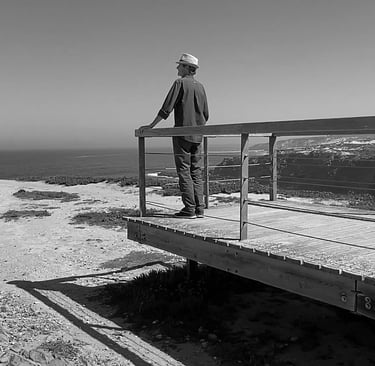
Observing the landscape is a learning process that goes beyond what we simply see. Beneath sensory reality, a layer of consciousness takes shape—one built over time, rooted in symbolic and mythical experience, and in our relationship with the cosmos.
The images are fragments of a whole that emerges from this relationship. Even when they seem unclear, they reflect a kind of “cosmogony” between the individual and the universal.
In ancestral cultures, natural elements carried a cosmic meaning. They expressed how creative forces shaped reality, and this intuitive understanding was part of everyday life—a balance between the visible and the hidden. Through rituals and symbolic practices, people sought contact with invisible forces believed to influence human destiny. This closeness to nature allowed a more holistic understanding of life.
Today, in an age shaped by technological progress, nature is no longer the stage for existential questioning. It has become something separate—a “state of divergence” from human activity. Practical thinking has overtaken cosmological vision, and analytical methods have often replaced a holistic view of the world. Within this context, landscape takes on new meaning. Like a pendulum, it moves between opposing forces, trying to reconcile what seems irreconcilable: the need to observe reality while preserving its essence, and the scientific impulse to divide and analyze it.
The work is grounded in the idea that nature keeps its original essence only when untouched. The world, as it truly is, remains hidden from us, because the moment we observe it, we begin to transform it. Every representation of nature, then, is not just an image but an integrated vision—one that gathers fragments of time, perception, geography, human impact, and even the awareness of possible civilizational collapse.
To represent both the visible and the invisible requires simplification. It means accepting that a small part can hold the whole. The work embraces the natural and selective process of perception—not as a faithful description, but as a reconstruction of a combined state. Here, uncertainty in creation is more important than fixed certainty. It opens ways of seeing and thinking beyond strict rational frameworks that claim to explain everything but often fail to find balance.
Over time, experience gives depth to the work and clarifies the artist’s point of view. What emerges is an attempt to express what it means to be alive—to reveal outwardly what is often kept within. Mapping the relationship between the self and the world becomes central. As Jorge Luís Borges suggested, every landscape can be a form of self-portrait: what we see carries the imprint of the one who observes. The outer world reflects inner nature, and consciousness becomes a space where different times meet—what is ancient and enduring, and what is new and fleeting.
This body of work is rooted in exploration and learning from reality. Each experience feeds into the process. The work grows through accumulation—layer upon layer. Adding becomes a kind of archaeology, a deepening search for meaning. What might seem like excavation is not subtraction, but a gathering of small elements into a larger whole.
Even if one can describe how the work is made, the deeper reason often remains unknown. What matters is to move forward, step by step, allowing the path to reveal itself.
There is also a tension between the need to make sense of things and the desire not to fully decode them. Meaning grows from within the work itself. It is not about naming, but about being. The process is winding and not always clear, yet it eventually finds its way. Even when a piece seems to reach a dead end, time remains part of the process:
“One way or another, the road will be covered. This difficulty is only an apparent impossibility. There are no failed acts—only the need to let time pass. The canvases that did not work at one moment are simply waiting for their time.”