Fleeting induction
The fact of working in series is an attempt to deepen an idea through small variations and sometimes, the representation goes beyond a certain limit and then another series appears but even so, this continuity is maintained because what unites these groups is as strong as what separates them, so it is difficult to establish a clear boundary between series. What seems to change is not so much the object of observation as the way in which it is seen.
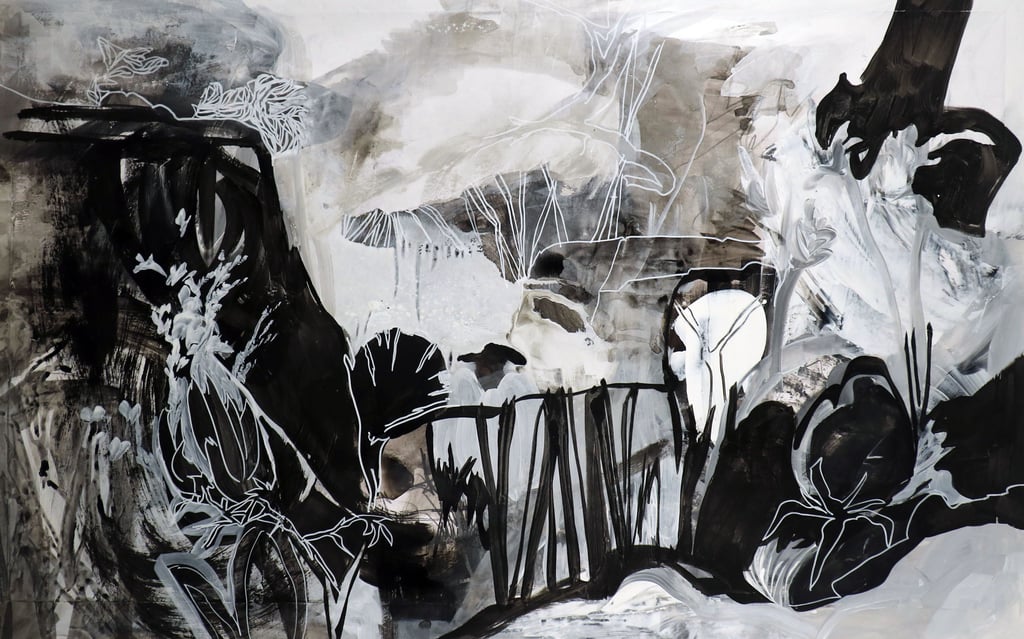
The creative process is not linear, it is made up of advances and setbacks, frustrations and surprises, but these changes depend very little on will. It's an unpredictable process, you never know what's going to happen next. When things work out in painting, it is usually because a constructive change has occurred, the kind that opens doors where none existed before. Ideas and gestures may be behind this change, but the reason why it happens is a mystery. One day you wake up with the feeling that something is different, there is a vibration in the air that interferes with the senses and the following weeks are spent trying to figure out what the contours of this change are. You make the most of your time, because the creative energy works well, the enthusiasm is great and the paintings appear without difficulty, one after the other. So when you stop and look at the work you've done, you feel like a transformative moment has happened, a storm that has changed the assumptions of what you thought was possible. This is usually what happens when a new series of works is born.
Later the questions arise. There is a reflection on what those paintings mean and why they appeared at that time, but no matter how much you think, there are no answers, it just happens. Progress and innovation should be seen as a gift, leaping forward does not happen every day, it is not something that can be anticipated or planned according to one's will. When it happens, it's a good day and worth the effort of the many fruitless attempts.
In painting the result is astonishing. If the previous day the work was entangled in failed attempts, the next day, these barriers disappear and the gesture takes flight, the ideas work and everything comes out right away and effortlessly. The painting resolves itself as if it had a will of its own, as if it were an independent thing that decided for itself that this was the right moment to take shape. This definition, which has been awaited for so long, appears in a new light that gives a face to the families of works that are the series. That's the difference.
When it happens, the effect is powerful, mainly because we are caught by surprise. It starts with a painting that is different from the previous ones, then others follow and at a certain point there is a critical mass that is the nucleus of a new family, a coherent group with its bonds of similarity, wanting to break through the established schemes, with that fluidity of its own and the freshness of a new horizon. That’s what I felt when I contemplated the first set of works in the “Fleeting induction” series. When I placed them side by side on the studio wall, it was a rewarding moment for the many hours spent searching for solutions.
As the series evolved, the initial aura disappeared, but the door had been opened and the path followed what had been established. The transformative moment that happened at the beginning spread throughout the paintings that came after, to prove that the shaking had not been a mirage. The evidence for this new position was reinforced over time as other paintings were added to the "Fleeting Induction" group.
Other moments like this happened and each of them brought something new, other approaches that resulted in new series of works. Series are windows and from each of these windows what you see is a unique landscape, with its nuances and its points of view, also with what comes from the maturation of ideas over time. In each series there is the assumption that it was experience that triggered the idea, but the way in which it happens is an enigma, it results from the involuntary act that translates into gestures that come from the random and the unexpected.
The first moment is about “doing”. It's about the automatic gesture that rolls the dice for what follows. You move forward without reflection. The goal is to move as far forward as possible while the energy flows. Later one can rationalize, relive the time of creation and reflect on what happened, think about relationships and connections and everything else. In retrospect, one can enjoy the victory and creative aura of the moment.
What do the words “Fleeting Induction” mean?
The meaning is not the most important thing, nor is the justification. What interests me is that it appeared in my head in the same way that the gestures appeared, forged with the energy of that moment and imbued with the same feeling. At the time it was just a set of words that empirically had the same vibration as the works. Later I realized that there was a concept that transversally ran through these works and that had to do with the visual energy of the landscape and the movement that comes from it, which is projected onto the paintings with a signature typical of fleeting impressions. Three moments spaced out in time had contributed to the birth of this concept, and together they contributed to understanding the words that had been chosen to name the paintings.
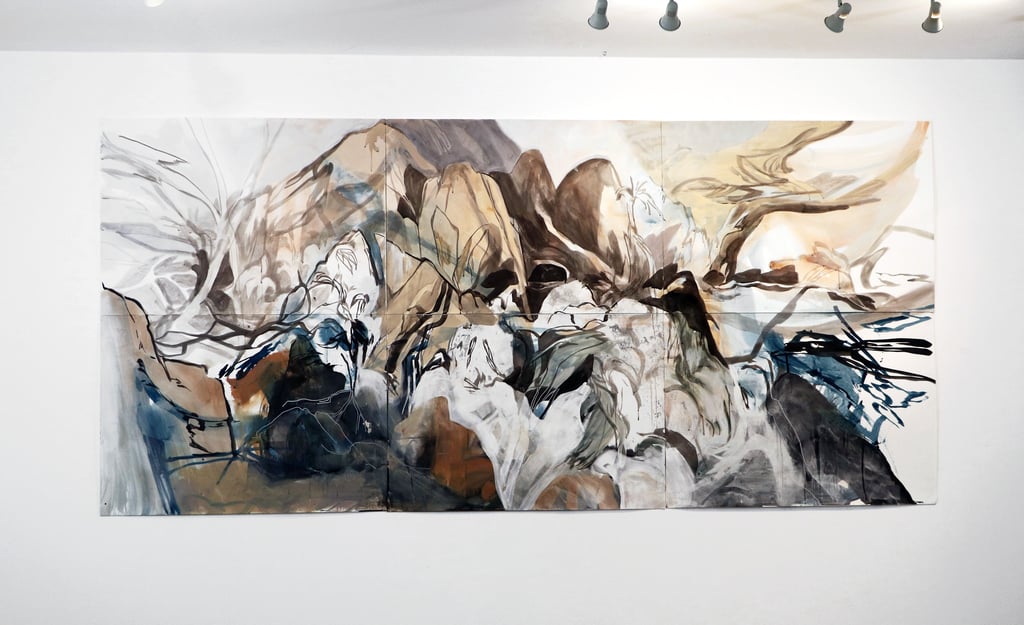
Pitões da Júnias
The first moment happened long before the first works in the series were made, on a trip to Trás-Os-Montes in the north of Portugal.
While I was there I didn't feel that anything extraordinary had happened, only after I returned did I begin to realize the effect that all of that had produced. I brought with me the notion that time defines the face of the landscape, a notion that perhaps would have helped the transformative moment to happen later.
Today I know that the starting point for this feeling occurred on a summer afternoon in an extraordinary place called Mosteiro de Santa Maria das Júnias.
It is a place far from everything, where every piece of land suggests hardness and severity. The strongest image I retained was of the ruined building, the old church that seemed to be in the process of becoming raw rock, as if it were something that had been there forever, that had not been built by human hands, as if it were an organic cathedral. What struck me most was the decay of the building, which despite being made of granite, already showed signs that if it wasn't restored, it wouldn't stay standing much longer.
As I gazed upon those ruins, I had the feeling that I was witnessing a process in reverse of that which had led a group of men to tear blocks of granite from the surrounding quarries and group them together in the midst of nowhere. Before me, the same elements but arranged differently - the human gesture, the granite, the earth and the plants - all of this was part of a balance of forces that was changing the appearance of the landscape. What I saw in Pitões da Júnias was the result of this, the continuous transformation of the landscape in search of another balance. I saw this because the symbiosis between the ruined building and what existed around it was extraordinary, with no clear boundary between them. The matrix of change was acting in both directions, transforming the building but also nature. That is why it seems to me that whenever I return to a place where I have been before, I feel a certain strangeness and this feeling is a consequence of the difference between what we expect to see and what is actually there, a difference that is the result of the changes that occur over time, that is the result of the evolutionary matrix that does well without us, that changes and evolves in our absence and that hides itself from the senses.
From then on, I began to give more importance to this strangeness and to realize that a large part of the knowledge I have about what is happening around me is also the result of my interpretation of what situations induce in me and this awareness of places builds a fiction that memory keeps as the history of the path taken. A subtle induction from which consciousness manufactures its reality.
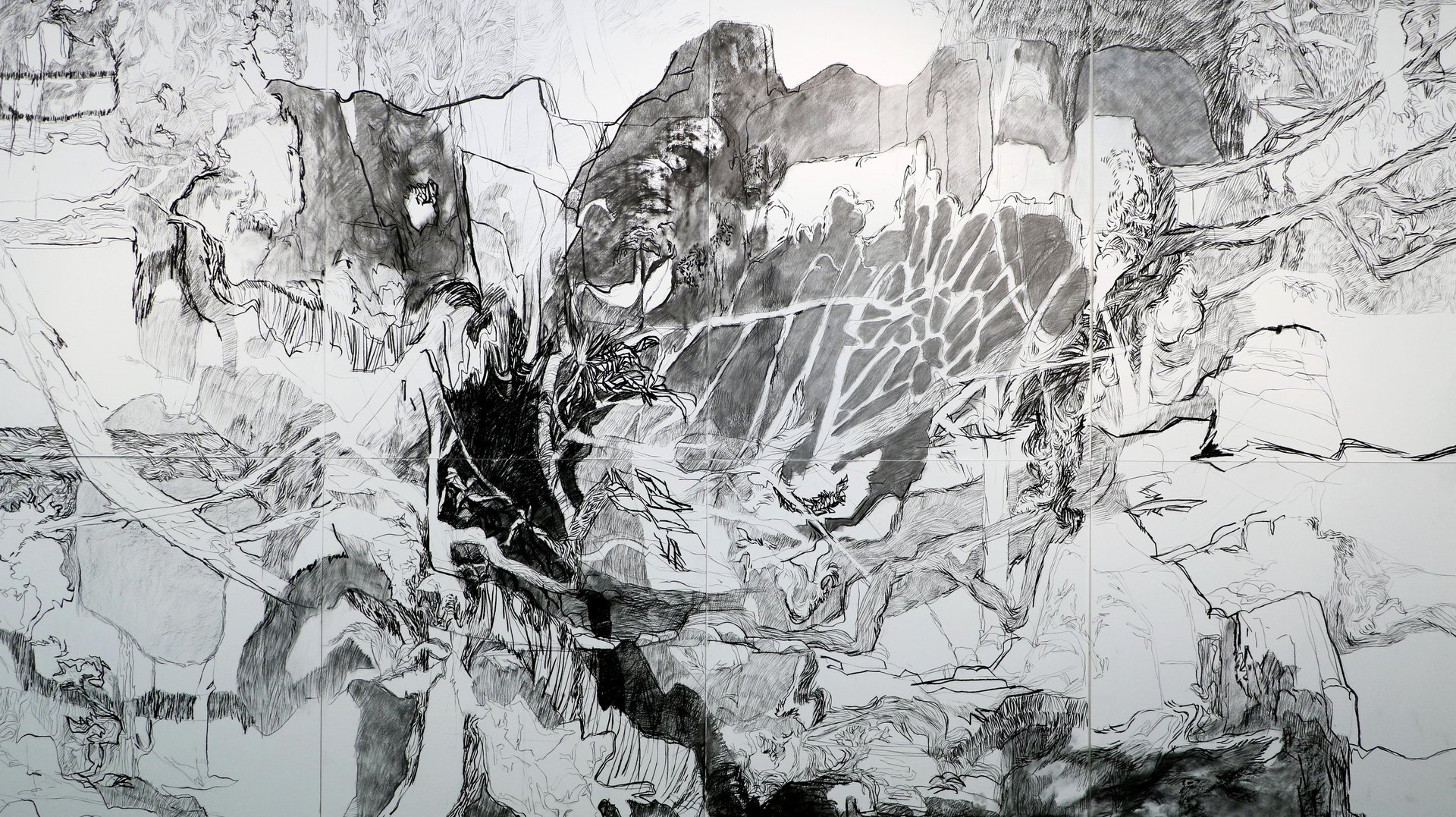
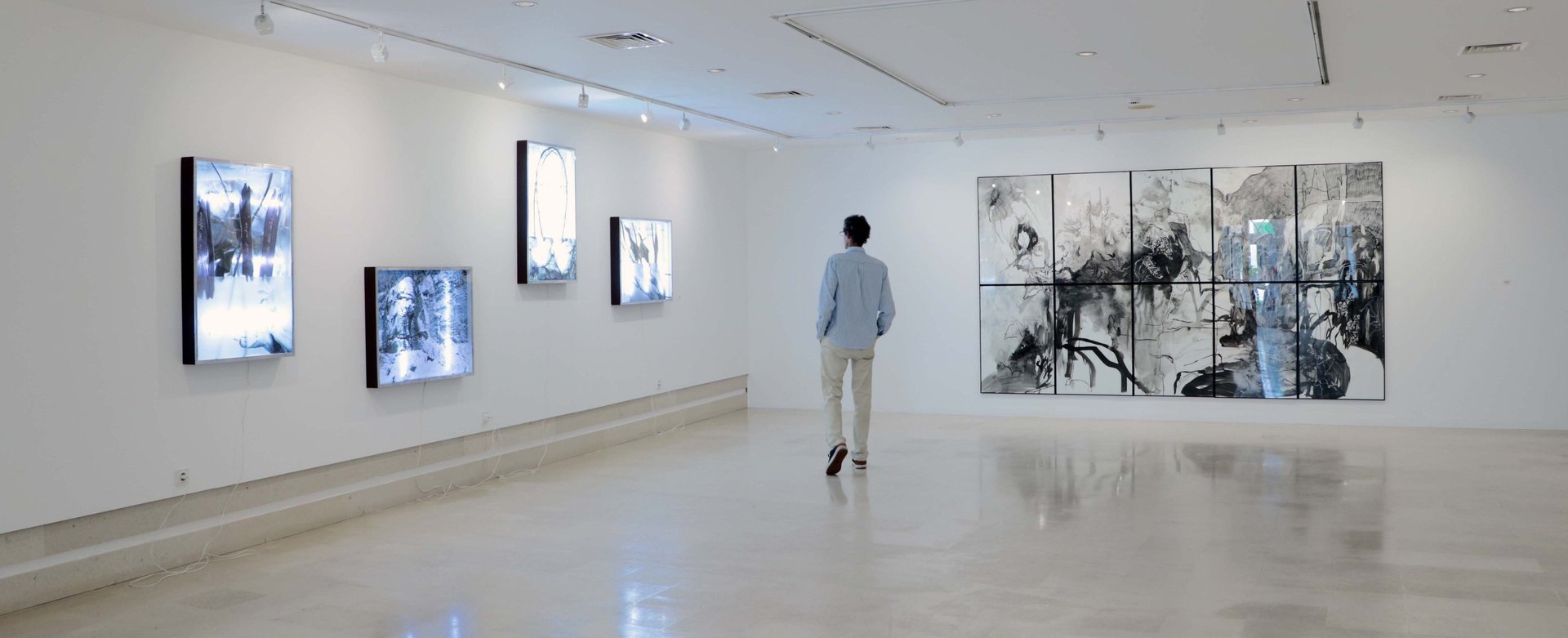
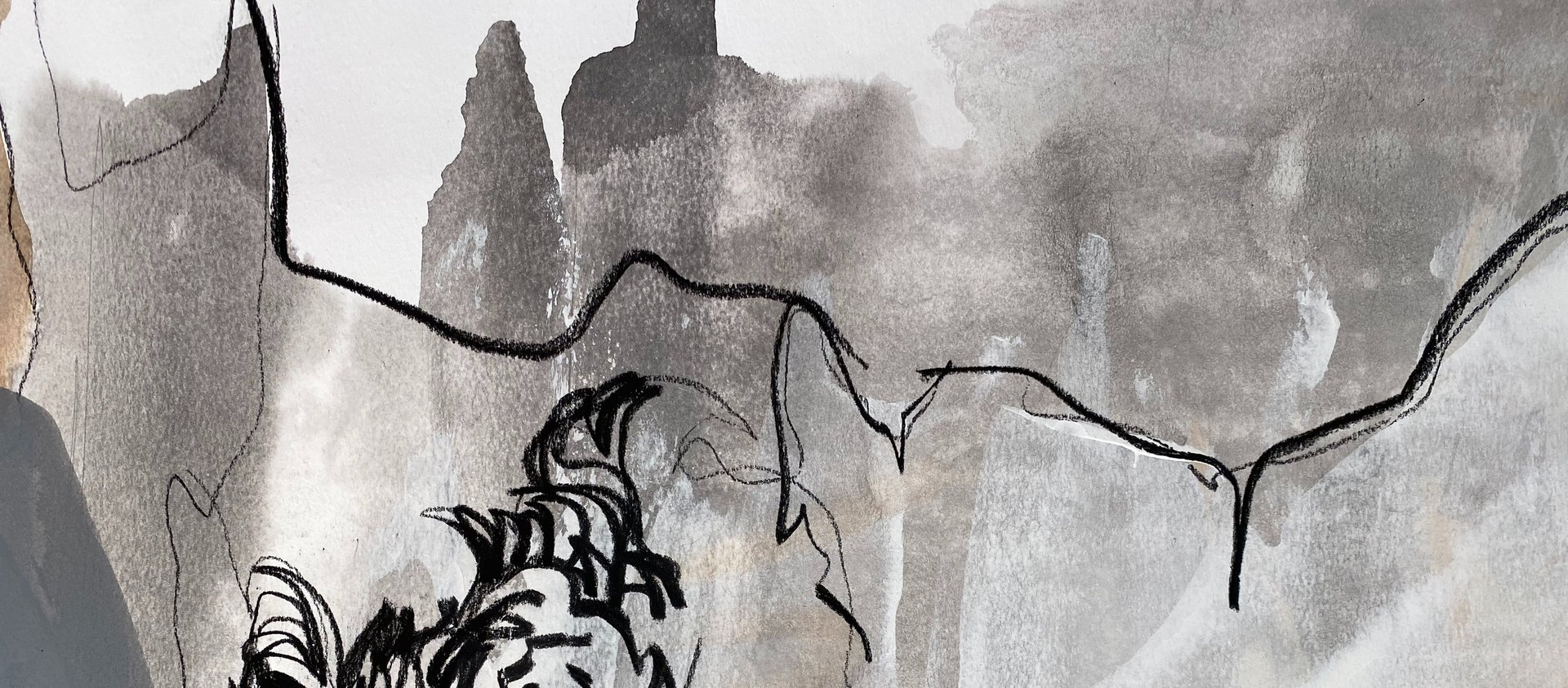
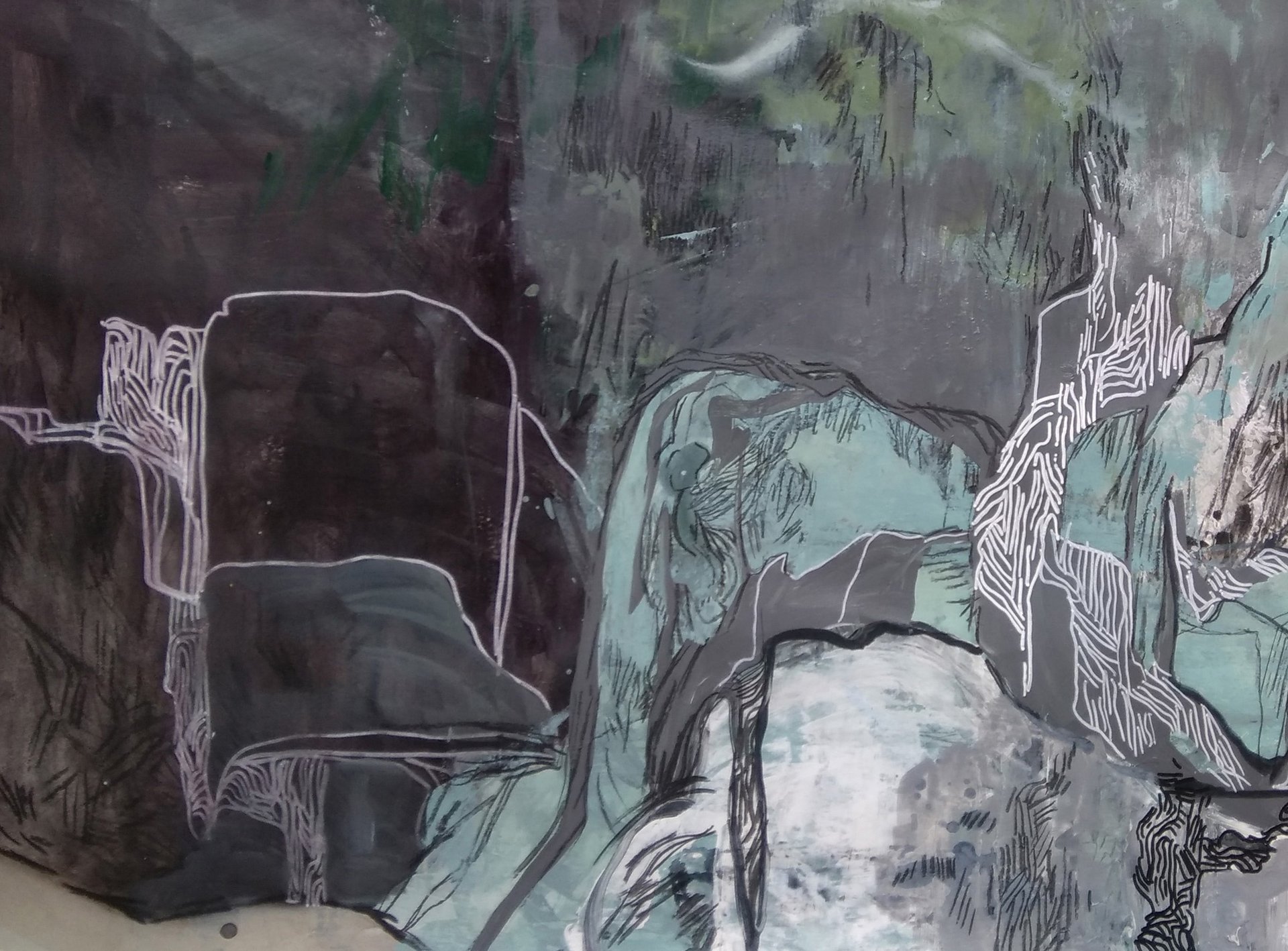
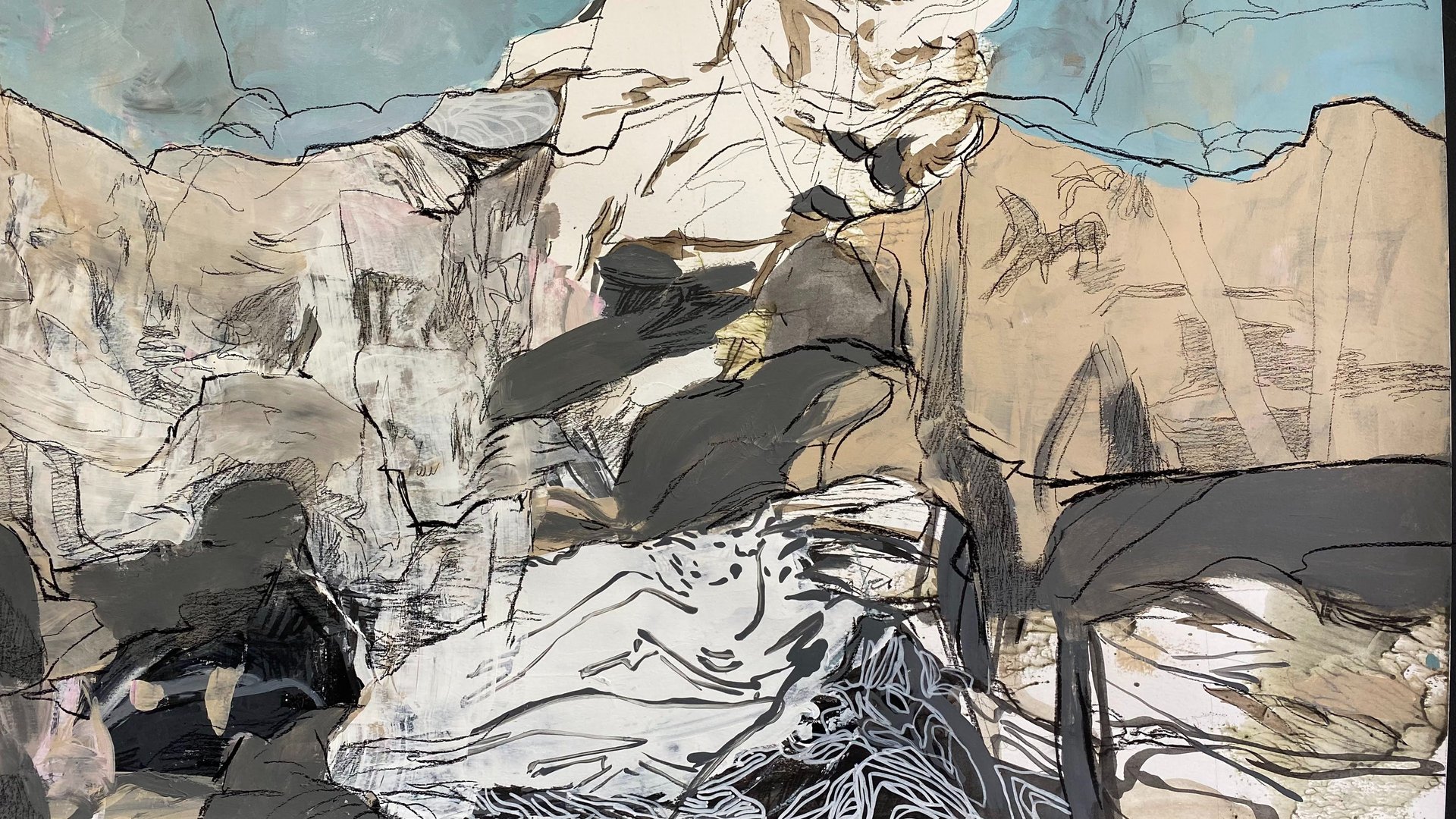
A different point of view
It was the analysis of a friend who, when observing some paintings that I had placed on the walls of the studio, drew my attention to an aspect that had never occurred to me. The painting he was looking at represented something that was familiar to him, but he could not specify where this impression came from.
He was skeptical when I told him that it was a painting that had evolved through many phases, that along the way I had lost track of the inspiration to make it. For me, it was an abstract landscape that sought influences here and there, that had to do with diffuse experiences that served the purpose of painting and the intuitive expression of the moment.
-Yes, but you must have brought something from the place or places, because there is a correspondence in these colors with a certain environment, with a setting that seems real to me - my friend said and that was surprising because it was precisely the type of thing I had been looking for for some time, to synthesize the experience of the landscape into a common essence, citing its formal side, but without portraying anything concrete. I wanted to do it in such a way that the vibe of the place would not be lost, without leaving the painting tied to similarities or tics of realism. I was convinced that to represent the feeling of experiences it was necessary to create a more comprehensive language, expressing energy as the primordial quality of places.A little further into the conversation, he continued talking about other works that were there. Although he is not a person with an artistic background, he surprised me with his objectivity. In his opinion, all the paintings had a common mark. He said it was curious how I demarcated two levels, a structure that more or less clearly organized the space on the canvas.
According to him, in each work two contrasting principles emerge, representing two distinct levels, the atmospheric space and the underground, with a clear cleavage between them.
- A curious situation - he commented - Because there is no clear boundary between layers, the difference is transmitted by a graphic code that includes the density of color and the profusion of lines in the drawing. This usually doesn't jump out at you right away because there is no horizon line, you only notice it after some time, your vision needs time to focus on the situation and then "bang" that open view appears, with the ground dissolving due to the weight of things, becoming a fluid skin incapable of containing what is above and at the same time hiding what is below. The surface does not exist as a plane of containment for the landscape and the vision sinks into this lack of density, it seems like a living world that moves, a world seen through movement, almost ethereal. This is a portrait of a state of change.
-But what change? I asked.
-The transformation of the physical world into the world of ideas, into the consciousness of things. It seems to me that you expose this in your paintings.
My surprise was even greater when he, after some more time contemplating the same painting, said to me - Are you sure that this landscape doesn't have to do with that place in the mountains where there is a stream, the Cabril Valley, where we used to go for a swim in the summer?
Now that he had mentioned it I saw that he was right. I was struck by the evidence. Without knowing or being aware of it, I had represented a site, which coincidentally, he knew as well as I did. Here was an image abstract enough that I had never associated it with its origin, but now that it was calling my attention, it seemed to have everything to do with that place.
When I became aware that there were symbolic elements in the works, I asked myself how this had happened and the only answer was that there was an interpretative code in memory. To create the paintings, I had relied on the apparent disorder of memory to structure the ideas and this was an important point in the process. The images were a mental transposition and not a description, they were the result of a code that represented the experience.
The fact of working in series is an attempt to deepen an idea through small variations and sometimes, the representation goes beyond a certain limit and then another series appears but even so, this continuity is maintained because what unites these groups is as strong as what separates them, so it is difficult to establish a clear boundary between series. What seems to change is not so much the object of observation as the way in which it is seen.
The relationship between the state of consciousness and the state of the world is based on both the differences and similarities between the two. It is a relationship that depends on what the observer feels, on how he positions himself when observing the world and his objectivity, the landscape reflects his state of mind and he thinks that this reflection is part of the scenery when in fact it is an identity that unites the landscape and the person at the same time.